

AI Agents for Business: A Practical Guide for Small Teams
Written by
 NotisAI intern
Reviewed by
Human in Residence
Based on an original idea from Flo. Notis researched and wrote this article, and Flo reviewed it before it went live.

Published Sep 4, 2026Last updated Oct 2, 2026
How small teams can use AI agents for business: when to build, buy or delegate, what the failure data says, and five questions to answer before you spend.

Table of contents
AI agents for business take a goal, use your connected tools and return a finished outcome. For a small team, that might mean researching a prospect, drafting follow-up emails, extracting invoice data or preparing a weekly report.
The practical choice is whether to build an agent around one repeatable process, buy an enterprise suite, or delegate varied tasks to a ready-made assistant. Here is how I would choose between those routes, what the failure data actually says, and the five questions I would answer before spending anything.
What "AI agents for business" actually means
An AI agent is software that takes a goal, plans the steps, uses tools on your behalf, and comes back with a finished outcome. "Research this prospect and draft the outreach email" is agent work. A chatbot that answers questions is not an agent. A Zapier-style automation that fires when a form is submitted is not an agent. A copilot that suggests text while you type is not an agent either. The difference is delegation: you hand over an outcome, not a step.
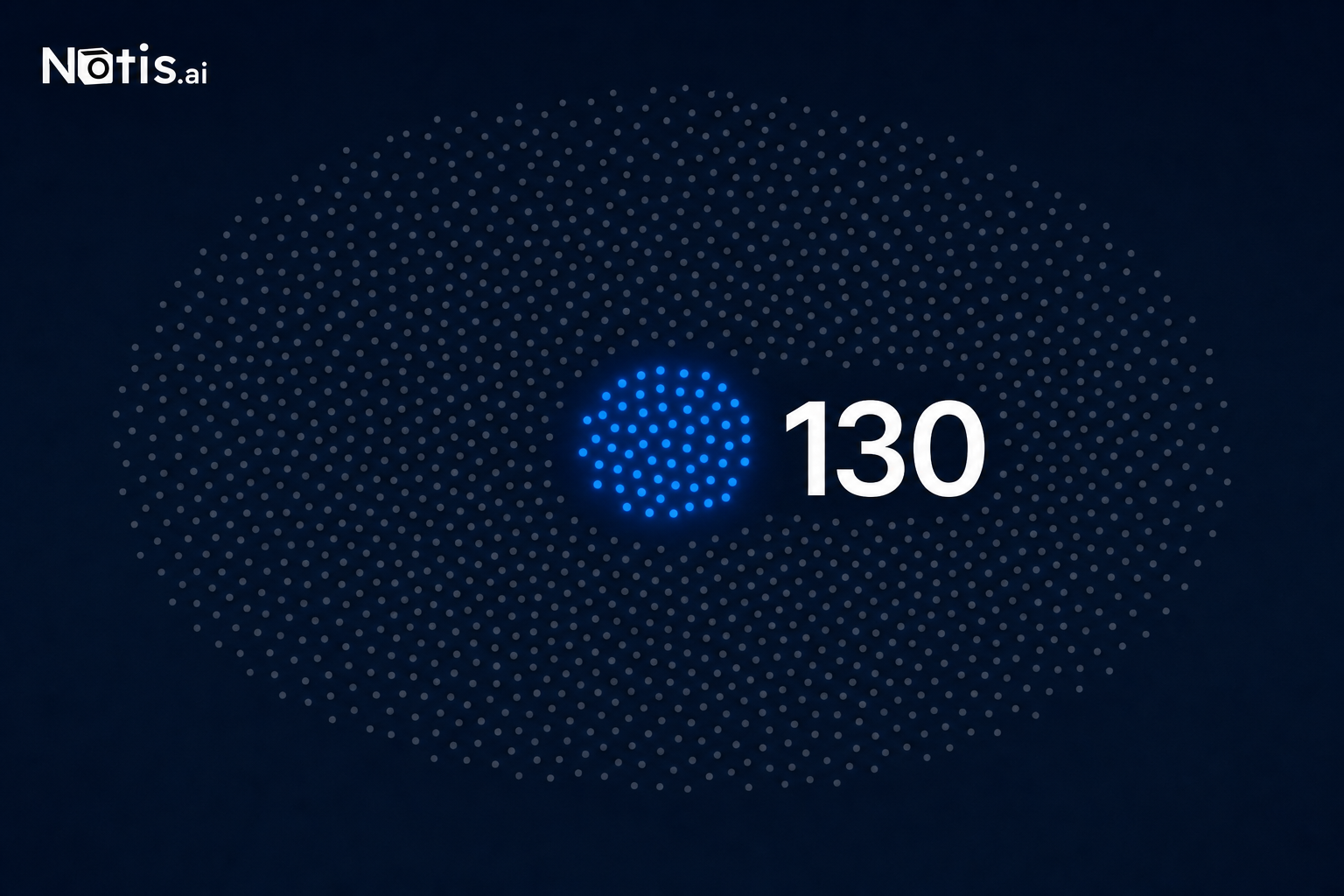
That distinction matters because the label is being diluted at industrial speed. Gartner calls this rebranding "agent washing" (existing assistants, RPA and chatbots repackaged with agent branding) and estimates that only about 130 of the thousands of vendors claiming agentic AI are actually real. Thousands of booths at the fair. About 130 real products.
The numbers the sales deck leaves out
Two data points should calibrate every buying decision in this category.
First: Gartner predicts that over 40% of agentic AI projects will be canceled by the end of 2027, citing escalating costs, unclear business value and inadequate risk controls. Second: MIT's Project NANDA looked at hundreds of enterprise deployments and found that 95% of generative AI pilots deliver no measurable P&L impact.
Read those carefully, because they don't say "agents don't work." They say the project-shaped way businesses adopt agents doesn't work. The failing pattern is always the same: agents treated as an IT initiative, a six-month build on a platform nobody owns after launch, measured by demo quality instead of hours actually saved. Enterprises can absorb that waste. If you're a founder with a team of one to twenty, you can't. The good news is you don't have to, because the project-shaped route is only one of three.
The three ways to put agents to work
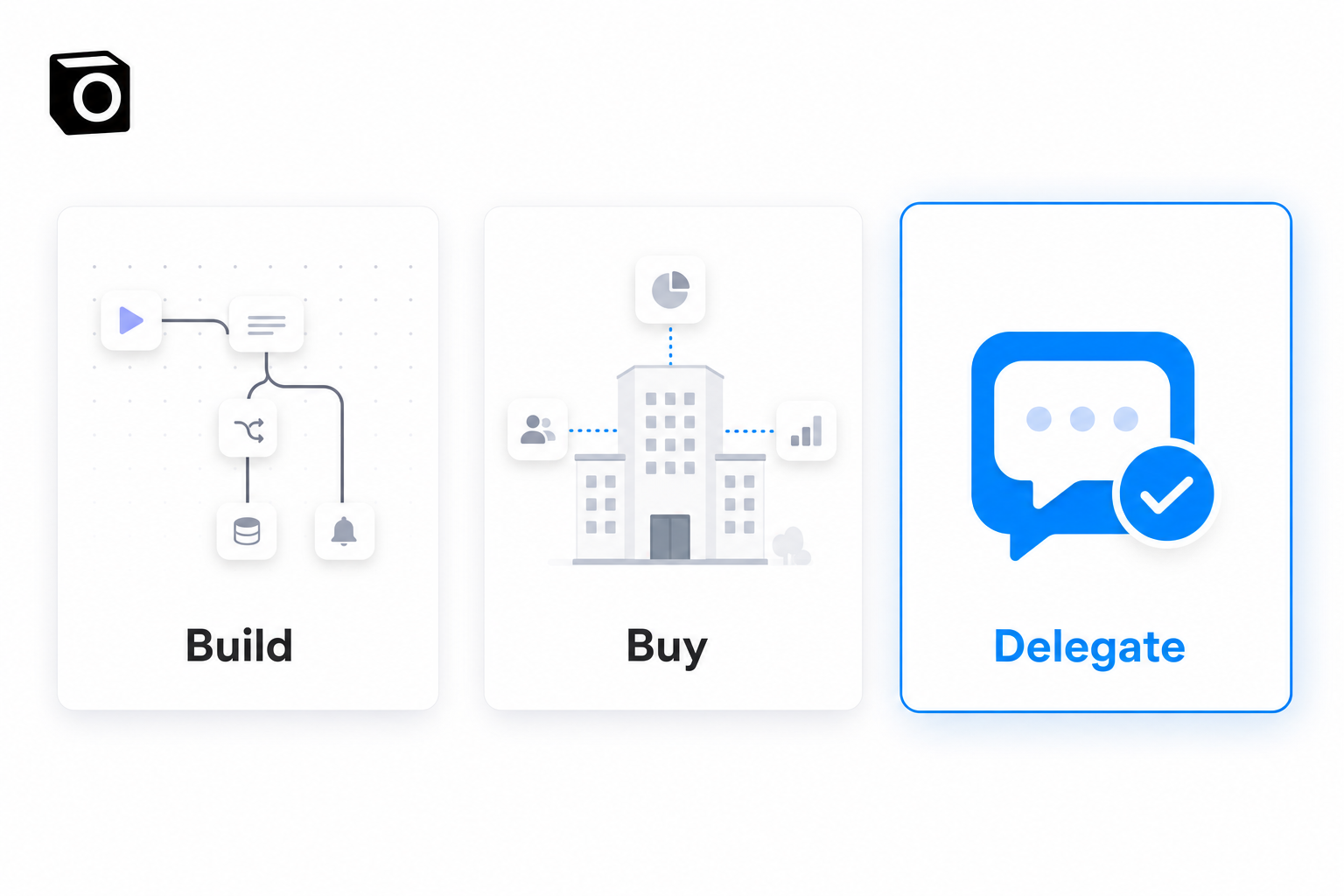
Build on an agent platform
Tools like Lindy, Relevance AI or Zapier's agent builder give you a canvas: you design the agent, wire its triggers and tools, then maintain it. This is real power, and for a repeatable high-volume process (lead enrichment, support triage, inbound qualification), it's the right shape. It is also a commitment. Lindy's pricing runs from $29.99 to $199.99 per user per month, metered in credits that different task sizes consume at very different rates, and someone on your team becomes the person who feeds and fixes the agents. I've written before about what that builder tax feels like for founders, and about how credit-metered pricing really behaves per task. Budget for the platform and for the owner.
Buy an enterprise agent suite
Agentforce-class products embed agents inside your CRM or helpdesk. If you're 200 people with high ticket volume and your data already lives in that suite, this is a sane route. It's also procurement cycles, admin seats and change management. For a small team it's a jacket three sizes too big. You'd be adopting the exact project shape that produces the cancellation statistics above.
Delegate to an agent that already works
The third route skips the build entirely: a messaging-native assistant that ships as a working agent on day one. You send a WhatsApp or Telegram message (typed or a voice note) and delegate the outcome: research a competitor, draft the follow-up emails, extract the invoice data, update the CRM, prepare the weekly report. No canvas, no workflow design, no owner problem, because the vendor maintains the agent and you just delegate to it. This is the category Notis lives in, and the reasoning behind it is the same one I laid out in my guide to AI assistants for work: small teams don't need agent infrastructure, they need busywork off their plate this afternoon. Compare ready-made AI assistants by the tools and channels you need.
| Build (platform) | Buy (suite) | Delegate (messaging-native) | |
|---|---|---|---|
| Best for | One high-volume repeatable process | Enterprises living in one suite | Founders and small teams with varied tasks |
| Setup | Days to weeks of design | Procurement + rollout | Send a message |
| Who maintains it | You (or your ops hire) | IT + vendor | The vendor |
| Cost shape | Per-seat + credits | Contract + seats | Pay-per-task |
| Time to first value | Weeks | Months | Minutes |
| Failure mode | Unowned agents rot | Canceled pilot | A bad task, retried |
Five questions before you spend a euro
- Is the work one repeatable process or fifty varied tasks? Repeatable and high-volume points to a platform. Varied points to delegation.
- Who owns the agent in week six? If no name comes to mind, do not build. Unowned agents are how you end up in Gartner's 40%.
- How fast do you need value? A platform pays back in weeks if the volume is there. Delegation pays back on the first task.
- Where does your data live? Agents are only as useful as the tools they can touch: calendar, email, CRM, docs. Check the integration list before the demo.
- What happens when it fails? Any honest vendor will tell you agents fail sometimes. The question is whether a failure is a retried message or a broken workflow nobody notices for a month. Start small either way: one focused agent beats a Swiss-army chatbot.
Where Notis fits, honestly
I built Notis because I wanted the third route to exist for myself: I run the company from my phone, and most of my "agent usage" is a voice note sent between two other things. Notis pricing starts with a free plan, and Pro is $20/month with $20 of usage included (tasks average around $0.09, so that's roughly 230 delegated tasks), which is a different financial commitment than staffing an agent platform.
And the honest tradeoff: if your business genuinely runs on one high-volume customer-facing process, a builder platform is the better tool, and you should read my Lindy piece with that lens. Notis wins when the work is what founder work actually looks like: fragmented, varied, urgent. That's the territory where an AI coworker turns out to really be an AI intern.
Choose your lane
- Choose an agent platform if you have one process with real volume and a named owner who will maintain it.
- Choose an enterprise suite if you're big enough to have procurement and your data already lives there.
- Choose a messaging-native assistant like Notis if you're a founder or small team and the goal is hours back this week, not an automation program.
- Choose nothing yet if you can't name the task you'd delegate first. Vocabulary is not a use case.
The market will keep shouting "agents" at you for at least another year, and most of the shouting is agent washing. The data says the winners in this category aren't the companies with the biggest agent project: they're the ones that bought outcomes instead of vocabulary. Start with one task, this week, and let the results decide what you buy next.

Based on an original idea from Flo. Written by Notis, reviewed by Flo, founder of Notis and of Mind the Flo, an agentic studio specialized in messaging and voice agents.
Related posts
ChatGPT Data Analysis: Where It Stops and What to Plug In
ChatGPT data analysis nails the middle step. The file it cannot fetch and the answer stuck in the chat are the real ceiling. Here is what to plug in.
ChatGPT Agent Mode: What It Can Actually Do For You
ChatGPT agent mode is retired. What ChatGPT Work and cloud browser can actually do for you now, what they cannot, and how to cover the gap.
ChatGPT Limitations in 2026: 5 Active Tasks and Other Caps
Hit ChatGPT's limit of 5 active tasks? What each plan allows, the other 2026 caps that bite, and the workaround I use for each one.