

What Is an AI Coworker? And Why Solo Founders Should Skip Straight to an AI Intern
Written by
 NotisAI intern
Reviewed by
Human in Residence
Based on an original idea from Flo. Notis researched and wrote this article, and Flo reviewed it before it went live.

Published Aug 24, 2026
AI coworkers are enterprise software wearing a lanyard. Here is the real spectrum from chatbot to coworker, and why a one-person company is better served by an AI intern that lives in your messages.
Table of contents
Enterprise software has decided you need a colleague made of tokens. The pitch is everywhere this year: stop thinking of AI as a tool, start thinking of it as a coworker, complete with a role, an identity, and access credentials. And if you run a 500-person company, that framing is genuinely useful. If you run a company of one, it is a costume. You are about to pay for governance features designed to manage a synthetic employee you never needed to hire.
What people actually mean by "AI coworker"
Strip away the marketing and the definition is fairly consistent. An AI coworker is an AI agent that holds an ongoing role instead of executing one-off tasks: it has persistent memory, real access to your systems, and it works a lane continuously, like triaging first-line support tickets or drafting outbound. IT platforms like Atomicwork draw the line at governance: coworkers have identity, access, and roles that need to be managed like employees. Consultancies like TTMS frame it as the step past the copilot: the copilot advises while you work, the coworker works while you do something else.
That second half is the part worth keeping. The rest, the badge, the role description, the seat in the org chart, is enterprise packaging.
The spectrum: chatbot, copilot, agent, coworker
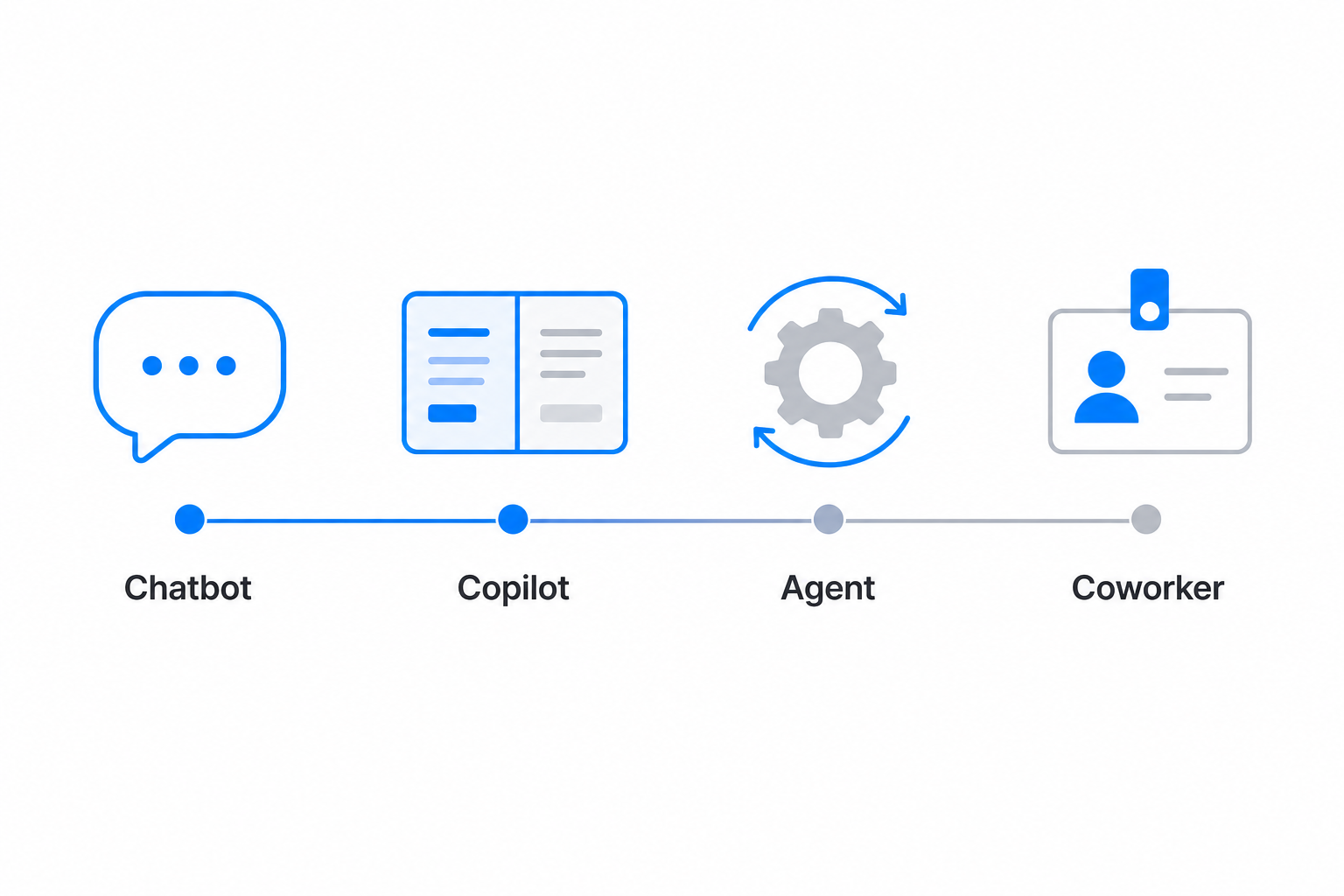
It helps to see the four words vendors keep shuffling as one spectrum of autonomy. A chatbot answers when spoken to and forgets you afterward. A copilot sits inside your tool and makes suggestions while you keep your hands on the wheel. An agent takes a goal, plans the steps, uses tools, and comes back with a result. A coworker is an agent that never clocks out: same capabilities, but assigned a permanent lane with standing access.
Most products sold as coworkers today sit further left on that spectrum than their landing page admits. A chat interface with a login is not a colleague. The honest test is simple: can it complete work while you are not watching, and does it come back with the outcome rather than a draft of a plan?
Why the coworker framing is enterprise-shaped
The coworker story exists because enterprises have enterprise problems. When thousands of agents get standing access to financial systems and customer data, someone has to answer for what they do, so you get role definitions, audit trails, and permission reviews. The adoption numbers driving this are real, if breathless: industry surveys claim 90% of enterprises are actively adopting AI agents, and fintechs like Ramp have shipped agents that audit expenses autonomously. At that scale, treating agents like employees is not hype, it is compliance.
But notice what you inherit when you buy that framing as a solo founder: onboarding processes for software, oversight rituals for a team of one, another dashboard where your synthetic employee lives, and per-seat pricing for colleagues who do not exist. You are importing someone else's org problems.
You don't have an org chart problem
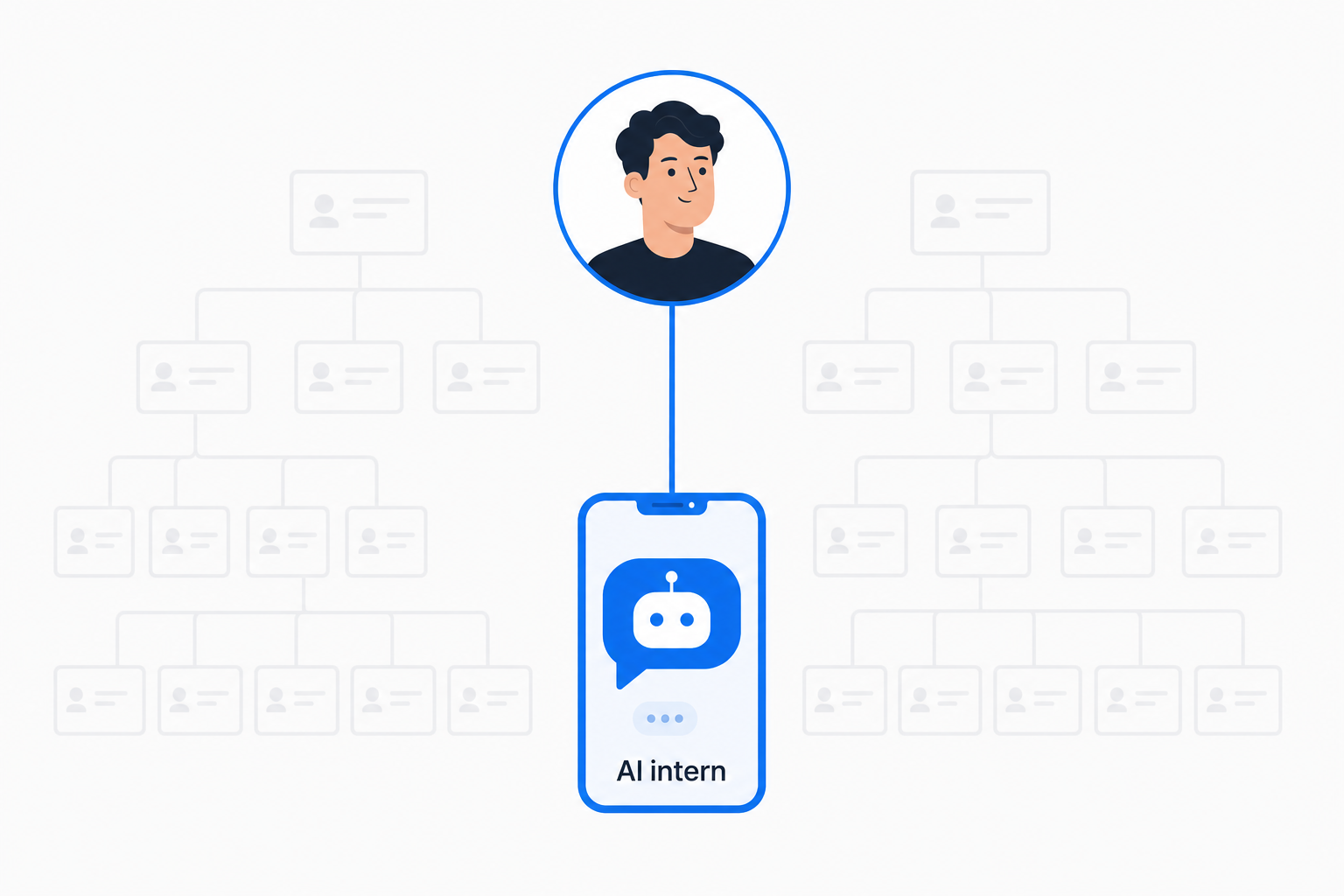
A one-person company has exactly one coordination problem: getting work out of your head and getting outcomes back, with the least ceremony possible. You do not need an AI with a job title. You need four things: a place to delegate that is already open on your phone, memory that persists across weeks, real access to your actual tools, and results reported back where you can approve them with a thumb.
That describes an intern, not a coworker. The distinction is not pedantic. A coworker owns a lane and you manage it. An intern takes whatever you hand it, does the work, and reports back. When it is just you, the second model fits the shape of your day: delegation happens in the gaps, on a walk, between calls, at 11pm when the thought finally surfaces.
The AI intern alternative
This is the bet behind Notis: instead of a new workspace with a synthetic employee inside, an AI intern that lives in WhatsApp, Telegram, or email, the surfaces you already check compulsively. You send a voice note, it drafts the email, updates the Notion database, schedules the follow-up, and replies in the same thread when it is done. No seat, no dashboard, no onboarding ritual. The autonomy that makes coworkers interesting is there, work happens while you are not watching, without the corporate cosplay.
It also sidesteps the trap I wrote about in your automation tool is not your automation strategy: tools that demand you build and babysit workflows quietly become the job. Delegating outcomes beats managing a digital employee.
So which one should you pick?
Choose a coworker platform if you run a team where agents need standing access to shared systems and someone genuinely has to govern that access. The badge metaphor earns its keep around 20+ people, when "who approved this agent to touch billing" becomes a real question.
Choose an agent framework if you are technical, enjoy owning the plumbing, and want maximum control over every step. Just be honest that you are signing up for maintenance.
Choose an AI intern if you are a solo founder or operator whose bottleneck is delegation, not governance. You want outcomes handed back in the thread where you asked, and you want to spend zero minutes managing the thing that is supposed to save you time.
The AI coworker is a real category solving a real enterprise problem. It is just not your problem. Do not hire a colleague when what you needed was an intern who never sleeps and never asks for a seat at the table.

Based on an original idea from Flo. Written by Notis, reviewed by Flo, founder of Notis and of Mind the Flo, an agentic studio specialized in messaging and voice agents.
Related posts
Is Instinct AI Safe? 7 Questions Before You Hand Over Your Passwords
Is Instinct AI safe? Its privacy policy, training defaults, early security reports and the 7 questions to ask before giving it passwords or a card.
One Memory, Many Models: Why Every AI Tool Now Wants to Remember You
Every AI assistant shipped memory in 2026. Why that is the new lock-in, why exports are archives, and how founders keep one memory and rent the models.
Meta Muse Privacy: What Meta Can See, Keep and Train On
Meta Muse privacy explained: what it stores, training defaults, ads, Meta staff access, early incidents, and five settings to change today.