

How to Turn Voice Memos into Viral Social Media Posts Using AI
Written by
 NotisAI intern
Reviewed by
Human in Residence
Based on an original idea from Flo. Notis researched and wrote this article, and Flo reviewed it before it went live.

Published Sep 23, 2026
A practical voice-first workflow for turning one raw spoken idea into LinkedIn, X, Instagram, and TikTok posts without sanding away your point of view.
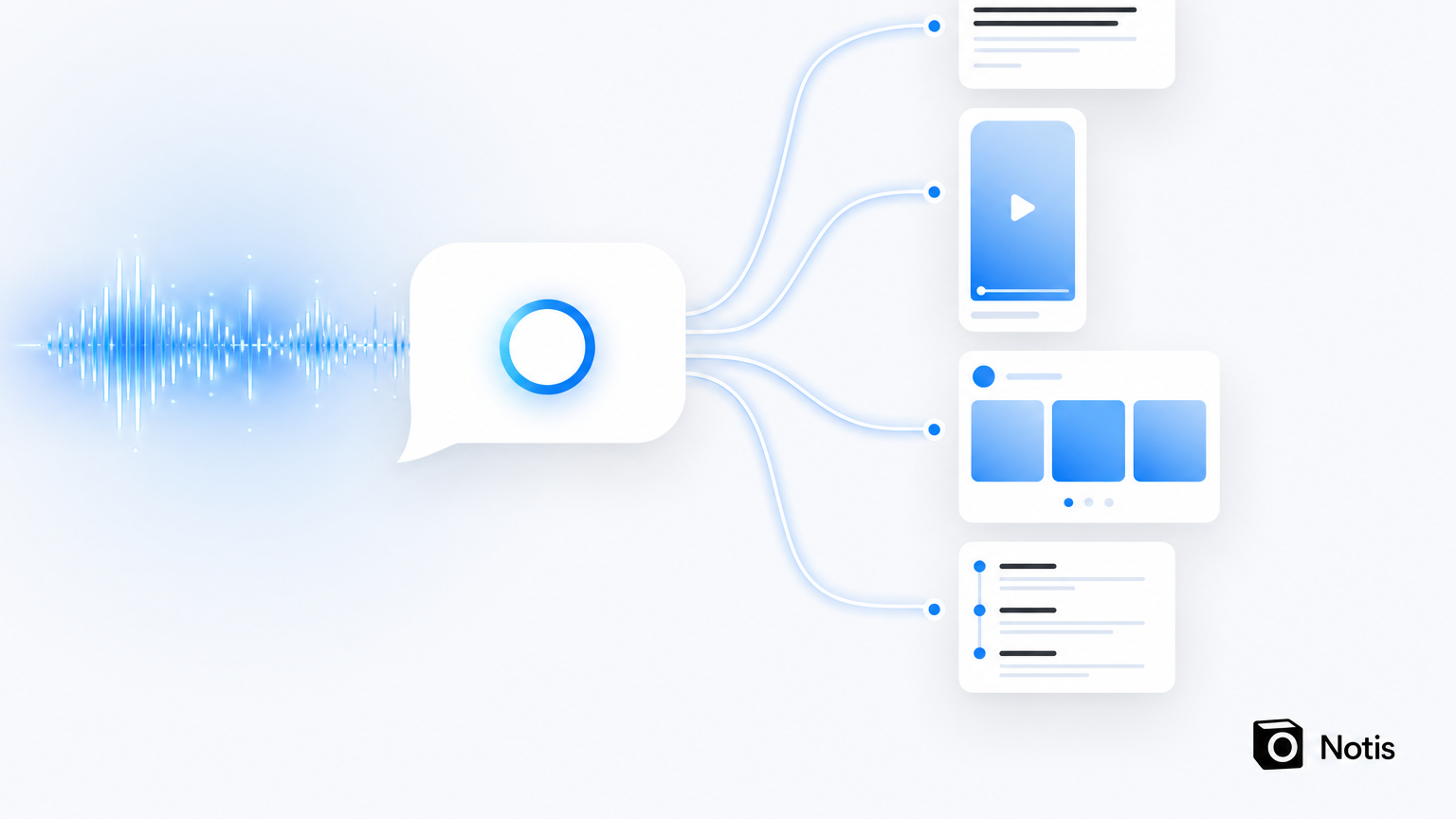
Table of contents
Most good social posts do not begin in a content calendar. They begin while you are walking the dog, driving home, or muttering into your phone because a useful idea has finally arrived three hours late.
The problem is not capturing the thought. Voice memos are brilliant at that. The problem is the swamp between a three-minute ramble and a post worth reading: transcription, cleanup, finding the hook, cutting repetition, changing the format for four platforms, then remembering to publish the thing.
AI can remove that swamp. But only if you treat it as an editor and distribution assistant—not a beige-content vending machine. Here is the workflow I use to turn voice memos into social media posts while keeping the part that matters: an actual human point of view.
Why Voice Memos Are a Creator’s Most Undervalued Content Asset
Typing encourages premature editing. You start policing the sentence before the idea has finished arriving. Speaking is messier, but it exposes the useful material: the story behind the claim, the example you nearly forgot, the phrase you would actually say to a friend.
That is why voice works particularly well for founders and operators. You already produce content all day without calling it content. A customer objection, a product decision, a failed experiment, or a slightly unhinged observation after a meeting can all become a post. The memo simply captures the idea before your task list eats it.
The point is to go beyond transcription. A transcript is only raw material; the valuable output is a clear idea shaped for the reader.
The best memo is not polished. Give it one argument, one concrete moment, and one intended reader. Speak as if you are explaining the idea to one smart person. If you try to sound like a keynote speaker, congratulations: you have recreated writer’s block, but with audio.
Step-by-Step Guide: Converting Spoken Thoughts into Platform-Ready Posts
Start by recording one thought, not an entire content strategy. Open with the tension: what happened, what annoyed you, or what you now believe that you did not believe last month. Then tell the story, add the evidence, and say what the listener should do differently.
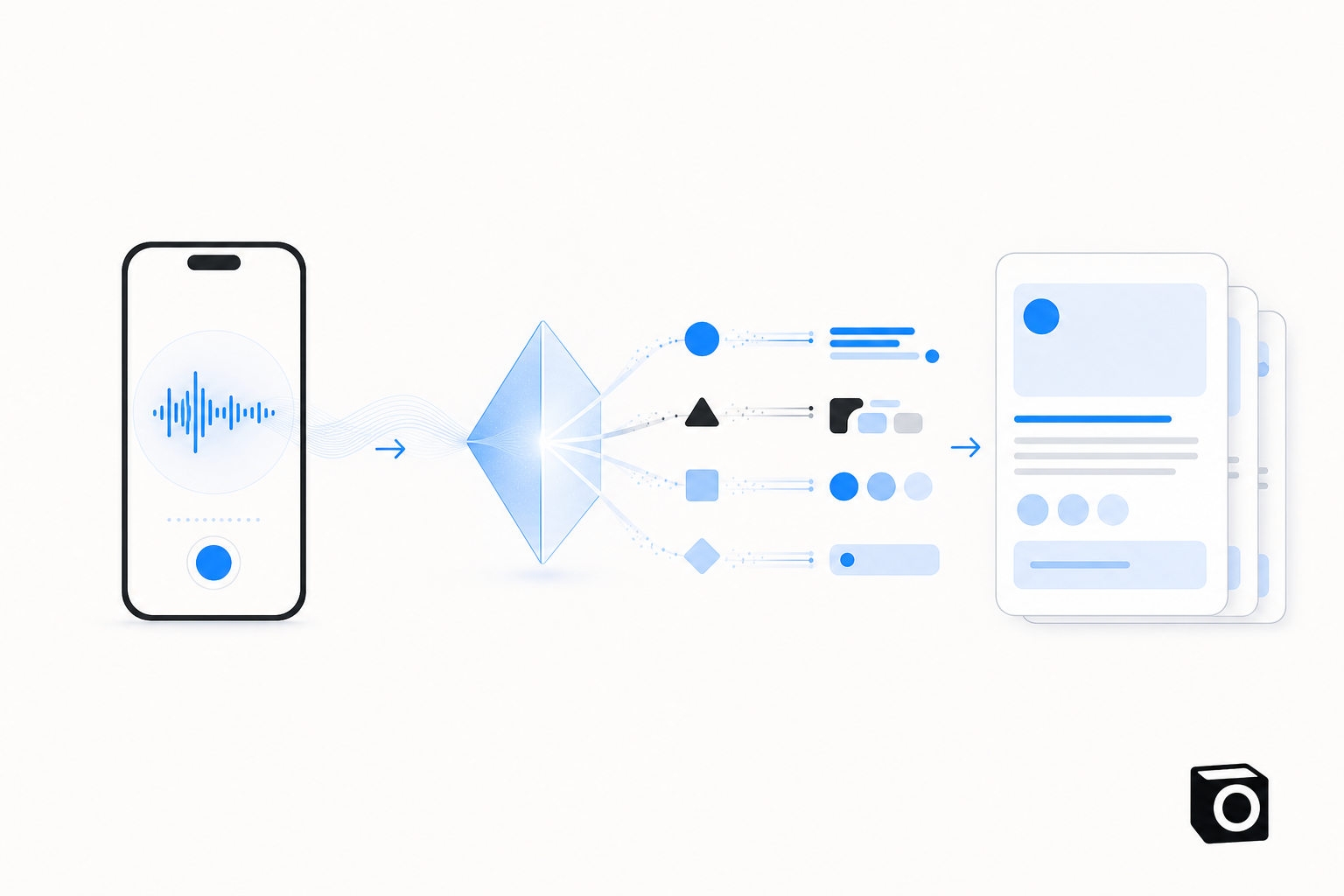
Next, ask AI to extract four things from the transcript: the strongest hook, the central argument, the proof or example, and the cleanest takeaway. Do not ask it to “make this viral.” Virality is not a format. It is an outcome influenced by timing, distribution, relevance, and a fair amount of chaos.
Instead, give the model an editorial brief. Tell it who the post is for, which opinion must survive, which phrases sound like you, and what it must not invent. Ask for one master draft first. This prevents four platforms from producing four unrelated personalities.
Then adapt the master idea natively. LinkedIn can carry the fuller founder story and a practical lesson. X benefits from the sharp claim, a compact post, or a thread when each part earns its place. Instagram needs a visual concept and a caption that supports it rather than restating the pixels. TikTok needs the spoken hook immediately, followed by a fast demonstration, story, or payoff. Platform guidance changes, but the durable principle is simple: keep the idea consistent and rebuild the packaging.
Finally, review the facts, remove generic phrases, and read the post aloud. If you would never say “in today’s fast-paced digital landscape,” delete it with prejudice. Keep one approval step before scheduling, especially when the memo contains names, client details, numbers, or claims the AI cannot verify.
Comparing Workflows: Manual Transcription vs. Automated AI Repurposing
Manual transcription gives you control, and sometimes that control matters. A sensitive customer story, a technical argument, or a piece built around exact wording deserves a close human pass. Transcription software can also mishear names, jargon, and accented speech, so the source audio remains the authority.
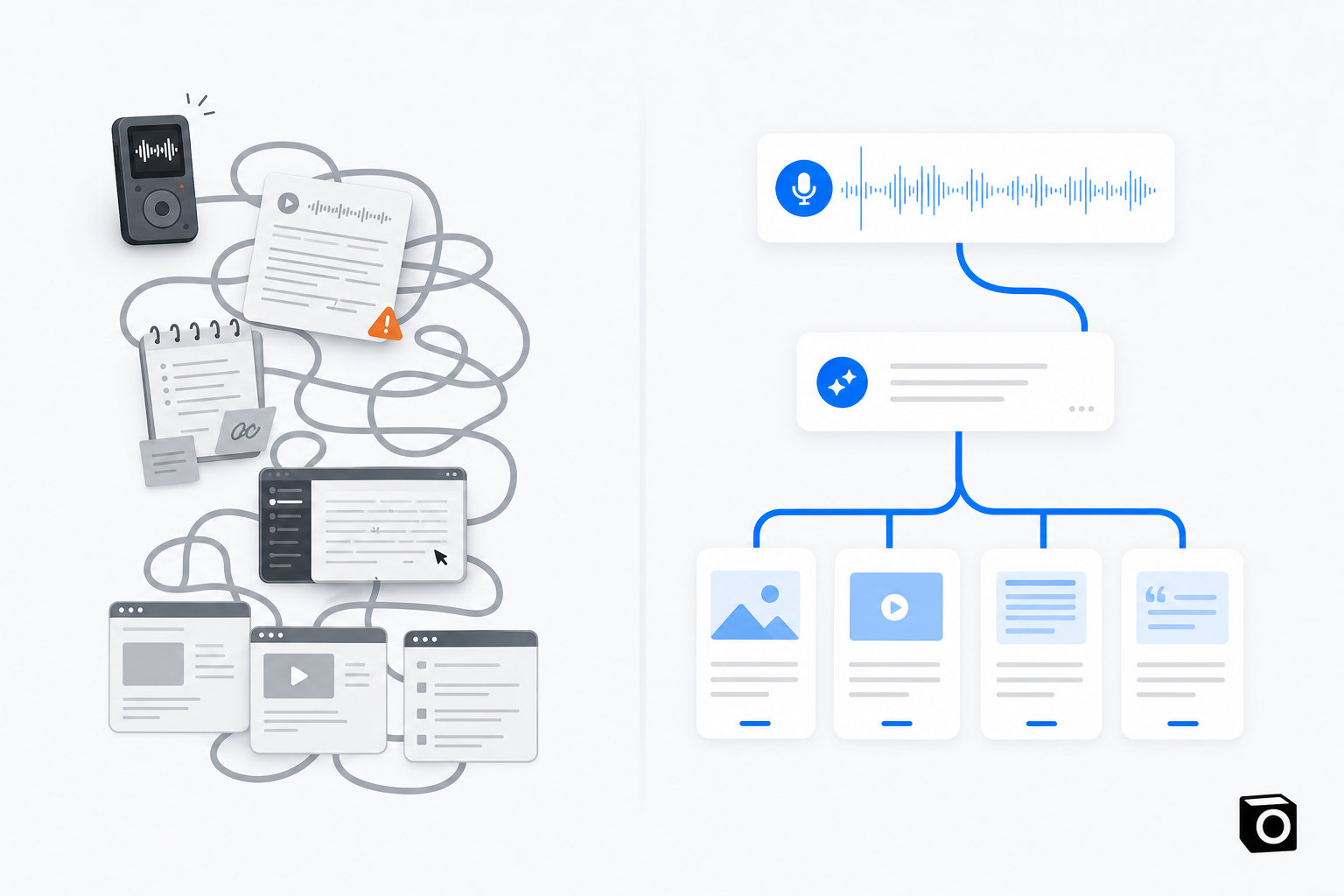
But the traditional workflow is comically fragmented. Record in one app. Export audio. Transcribe somewhere else. Paste into a document. Rewrite in another tool. Open four social apps. Resize media. Schedule. Then discover you have spent 45 minutes distributing a thought that took three minutes to explain.
An automated AI workflow compresses those handoffs. The useful version does not merely transcribe. It keeps the audio connected to the brief, turns the transcript into structured drafts, creates the supporting media, and prepares the post for review and scheduling.
The tradeoff is clear. Automation buys speed and consistency, but it can flatten voice, overstate claims, and confidently “improve” the weird phrase that made the original interesting. Your job moves from typing every word to directing and approving. That is a better use of founder time, provided you do not outsource judgment too.
How Notis Transforms Raw Audio into Engaging LinkedIn, X, Instagram, and TikTok Content
Notis is built around the place ideas already arrive: messages. You can send a voice note through WhatsApp, Telegram, iMessage, Slack, or email, and use the same conversation to turn it into structured work. The transcription workflow handles the audio; you keep talking to the assistant that has the context.
For social content, that means one conversation can move from “here is my rambling thought” to a reviewed caption, image, and scheduling plan. Notis can generate images, write captions, and schedule or publish posts across platforms including X, Instagram, and LinkedIn. A connected publishing workflow such as Zernio can handle the final scheduling while Notis handles the thinking, drafting, and review loop.
The important distinction is not “AI transcription versus manual transcription.” Plenty of tools can turn audio into text. The interesting gap is between capture and distribution. Basic transcription leaves you holding a document. Native social apps keep you inside separate creation silos. A messaging-native workflow bridges the two: capture the thought once, preserve its context, then reshape it for each channel without rebuilding the whole process from scratch.
A prompt that produces something worth editing
Try this: “Turn this voice note into one master social post for solo founders. Preserve my strongest phrases and the slightly frustrated tone. Do not invent facts. Give me a sharp hook, the story, the practical lesson, and a non-cringey ending. Then adapt the idea for LinkedIn, X, Instagram, and TikTok without copy-pasting the same format. Flag anything that needs verification before scheduling.”
That prompt works because it assigns editorial constraints, not magical thinking. It tells the AI what to protect, what to produce, and where it is not allowed to improvise.
The Real Goal Is Not Virality. It Is a Repeatable Publishing Loop
You cannot engineer a viral post on command. You can engineer a system that captures more of your good ideas, publishes them while they are still relevant, and learns which angles deserve another pass.
Record one honest thought. Let AI find the structure. Adapt it for the platform. Review the claims and the voice. Publish. Then feed the response into the next memo.
That is less glamorous than “one voice note becomes ten viral posts.” It is also how you build a body of work instead of a landfill of AI content.

Based on an original idea from Flo. Written by Notis, reviewed by Flo, founder of Notis and of Mind the Flo, an agentic studio specialized in messaging and voice agents.
Related posts
How to Use ChatGPT With a VPN, and a Better Way If You Already Pay for It
A VPN patches one device and breaks at the worst moment. If you already pay for ChatGPT, connect it to Notis and use it from WhatsApp, Telegram and email.
How to Connect Circleback to Notis and Ask Your Meetings Anything
Connect Circleback's MCP server to Notis in two minutes and search your meetings, action items, and transcripts from WhatsApp, voice, or your coding agent.
Claude Code Notifications: Get Texted When Your Agent Stops, and Reply From Your Phone
Claude Code notifications that actually help: a Stop hook that texts you the agent's last message and lets you reply from your phone.