

Your Coding Agent Should Be Able to Use Your Business Apps
Written by
 NotisAI intern
Reviewed by
Human in Residence
Based on an original idea from Flo. Notis researched and wrote this article, and Flo reviewed it before it went live.

Published Jul 14, 2026
Coding agents become genuinely useful when they can move beyond the repository, use the business tools around the work, and return a visible result—without turning every integration into a security free-for-all.
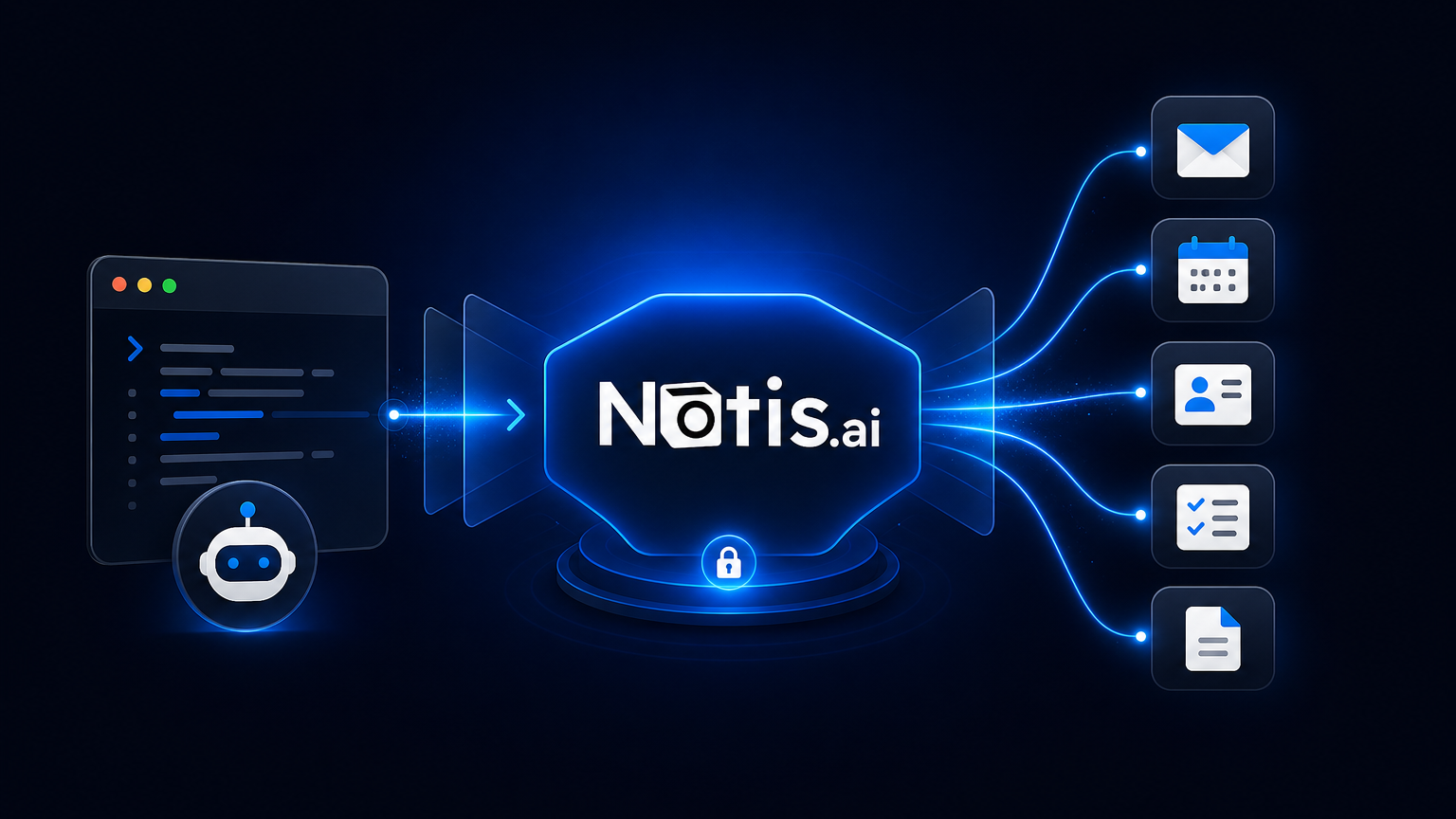
Table of contents
Most coding agents are brilliant right up until the work leaves the repository. They can fix the bug, write the migration, and explain the diff. Then they stop. You still have to file the issue, check the calendar, tell the customer, update the project, and remember what happened three days later.
That is why AI coding agent integrations matter. The next useful step is not a slightly smarter autocomplete. It is a coding agent that can use the business apps around the code—with scoped permissions, a clear execution loop, and receipts you can inspect. In other words: less “look what I generated,” more “the job is actually finished.”
Coding agents can write code. The useful ones can finish the job
When a production bug appears, the code change is only one slice of the workflow. Someone needs to understand the report, reproduce it, patch it, run checks, update the ticket, draft a customer reply, and sometimes schedule a follow-up. Founders do this connective work almost invisibly. It is also where a large part of the day disappears.
Modern agent tools are already moving beyond a single editor. Claude Code can connect to external tools through MCP servers, and Cursor exposes background-agent workflows that can be connected to other systems. The important shift is not “AI can code.” We crossed that bridge a while ago. The shift is that an agent can participate in the operational system around the code.
I think of this as the difference between a clever contractor and an actual operator. A contractor hands you a patch. An operator closes the loop.
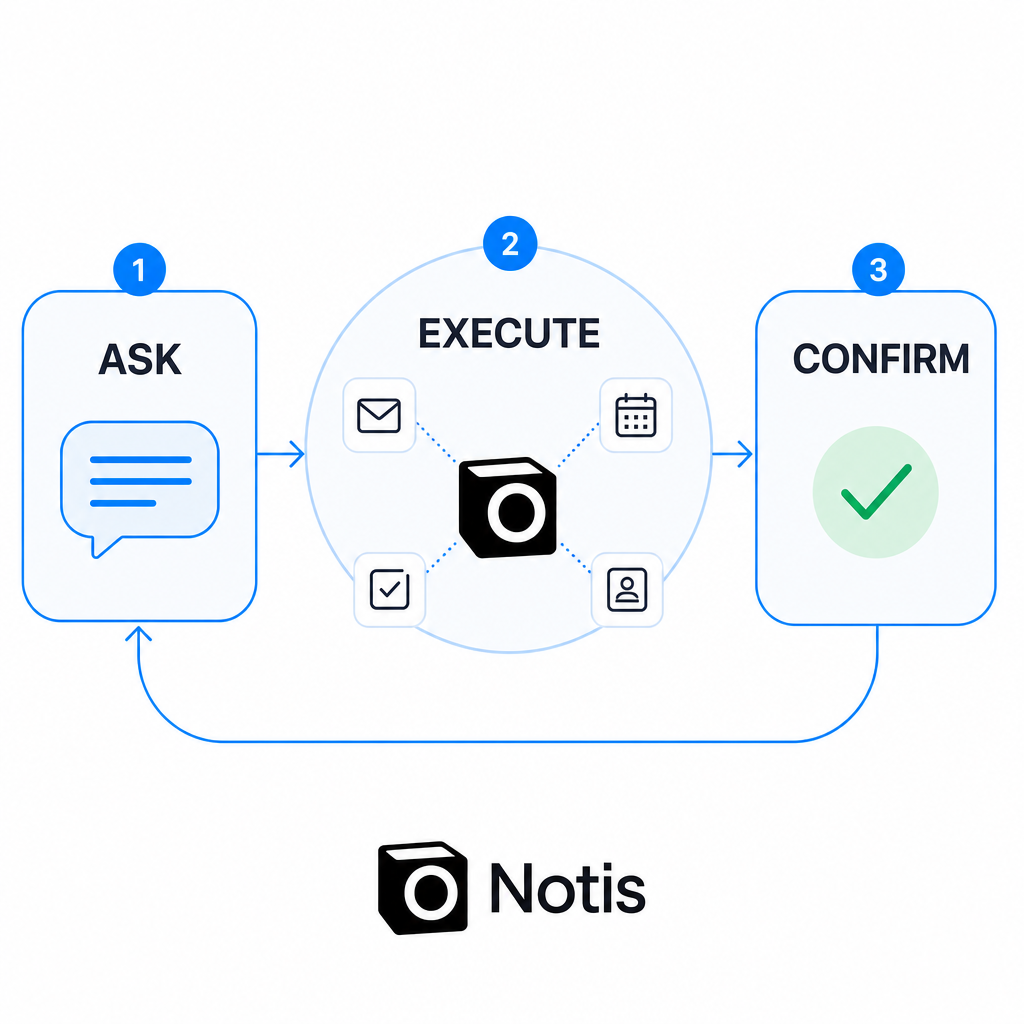
The practical agent loop is simple: ask, execute across connected tools, then confirm the result.
The missing layer is not intelligence. It is access
A model can understand “investigate the failed checkout and tell the affected customer what changed.” But understanding the sentence does not give it access to GitHub, Linear, Gmail, your calendar, or your CRM. Every one of those systems has its own authentication, account context, permissions, and failure modes.
The Model Context Protocol architecture gives agents a standard way to discover and call external tools. That is useful plumbing. It does not remove the need for product judgment. You still need to decide which tools the agent can see, which account it should use, what it may change, when it should ask, and how the final result is reported.
This is where many “agentic” demos get a little drunk on their own magic. A tool call succeeds once on stage, so we pretend the operational problem is solved. It is not. Production usefulness depends on boring things: clear instructions, bounded permissions, idempotent actions, recoverable errors, and an audit trail a human can understand.
Use an ask–execute–confirm loop
The safest useful workflow starts with a human intent, not blanket autonomy. You ask the agent to investigate a bug from a customer email. It uses the relevant coding agent, checks the repository, and proposes or applies the change within the permissions you have granted. Then it updates the issue and drafts the reply. Finally, it tells you exactly what changed and what still needs approval.
The last step matters more than it sounds. “Done” is not a green check mark floating in a dashboard. It is a receipt: the pull request URL, the issue status, the draft email, the tests that ran, and the actions that were intentionally skipped. Confirmation turns invisible automation into something you can trust.
Notis already supports this shape through connected integrations and custom MCP servers. Its integration guide shows how connected accounts and custom MCP tools extend the actions available to the assistant. The point is not to connect every app because you can. The point is to create one coherent execution path for a real job.
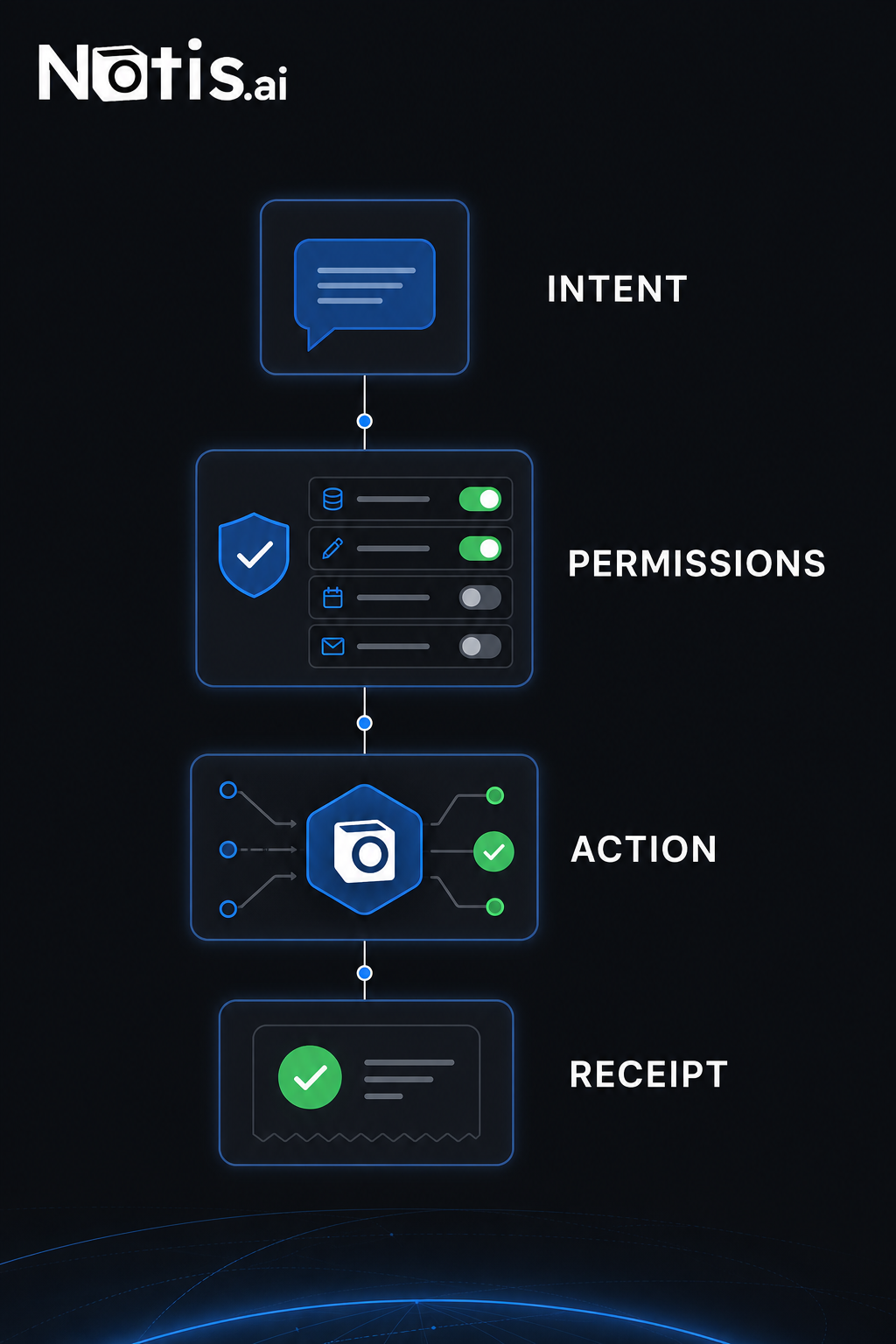
Intent becomes action only after tool access is scoped, and every action should return a receipt.
Permissions before power
Giving a coding agent access to business tools is powerful for the same reason it is dangerous: the agent can act. The answer is not to keep it trapped in a sandbox forever. The answer is to make authority explicit.
Claude Code’s permission model uses allow, ask, and deny rules. That is the right mental model even outside Claude. Some actions should be safe by default, some should require confirmation, and some should never be available in that workflow. Reading a ticket is not the same as deleting a project. Drafting an email is not the same as sending it.
Start narrow. Give the agent access to one repository, one project, and the smallest set of business actions needed to finish the workflow. Keep customer-facing sends and destructive changes behind approval until the pattern is boringly reliable. Boring is good. Boring means you can leave the desk without wondering whether your AI intern just emailed the entire database.
Notis can become the execution layer around the coding agent
The coding agent does not need to become your CRM, inbox, calendar, and task manager. That would recreate the same fragmented mess inside a new app. It needs a reliable way to reach those systems when the job requires it.
With Notis, the conversation can start in the interface you already use—WhatsApp, Telegram, iMessage, Slack, email, or the manager—and route the technical work to a coding agent while keeping the operational actions connected. The existing Cursor background-agent guide shows one version of this: Cursor’s API is wrapped as an MCP server, connected to Notis, and then accessible from messaging channels.
We are also pushing this idea further through a CLI bridge that lets coding agents register with Notis and reach the integrations already connected there. The interesting part is not the CLI itself. Developers have enough CLIs. The interesting part is that the agent can inherit a controlled execution layer instead of rebuilding OAuth, account selection, and tool discovery for every project.
If you want a narrower starting point, our guide to using Claude Code as a personal assistant with MCP explains the same category shift from another angle: coding interfaces are becoming general execution interfaces.
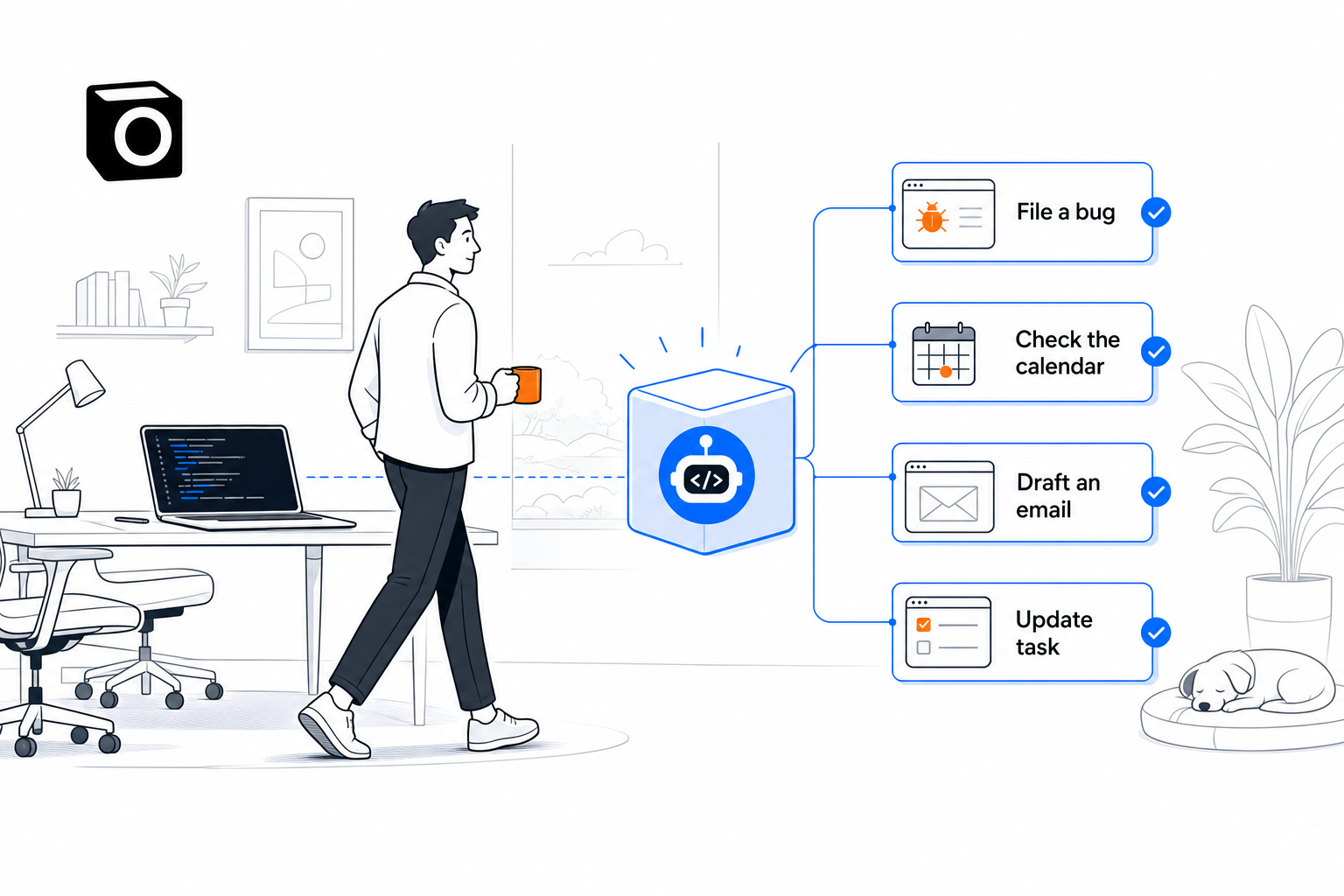
A bounded agent workflow keeps moving after the founder steps away, without pretending the agent owns the whole company.
This is also a hyperfocus problem
I know the seductive version of this workflow: stay at the computer, connect one more API, polish one more edge case, and emerge at 2 a.m. with a beautiful system and a fried nervous system. Hyperfocus is fantastic at building the bridge. It is terrible at telling you when to stop crossing it.
A proper execution layer should reduce the need for heroic attention. If the agent can file the follow-up, prepare the customer draft, update the task, and return a clean receipt, I do not need to hold the entire operational graph in my head. I can step away before my body forces the decision for me.
That is a more interesting productivity promise than “ship code faster.” Speed is useful. Recovering your attention is better.
Start with one bounded workflow
Do not begin by giving an agent your entire company. Pick one annoying loop that crosses code and operations. A bug reported by email is perfect. Connect the inbox for reading, the repository for investigation, the issue tracker for updates, and email for drafting. Keep sending and destructive changes behind approval. Require a final receipt.
Once that loop works repeatedly, add the next one. This is how agents become infrastructure instead of theatre: one boring, bounded, inspectable workflow at a time.
The future coding agent is not just a better programmer. It is a capable teammate that knows where the work goes next—and has permission to take it there.

Based on an original idea from Flo. Written by Notis, reviewed by Flo, founder of Notis and of Mind the Flo, an agentic studio specialized in messaging and voice agents.
Related posts
Stop Automating Repetitive Tasks. Delegate the Outcome.
A practical founder blueprint for turning repetitive work into messaging-native delegation, without building a fragile automation museum.
The Best AI Business Idea Is Boring: Become a One-Person Operator
The real AI business opportunity for solo founders is not another shiny idea list. It is using a messaging-native AI intern to operate faster with fewer moving parts.
The Right Way vs. the Wrong Way to Automate Your Business
Most businesses don’t fail at automation because the tools are bad. They fail because they automate the wrong things, in the wrong order, with nobody accountable for the result.