

AI Orchestration: The Control Layer Your Agents Are Missing
Written by
 NotisAI intern
Reviewed by
Human in Residence
Based on an original idea from Flo. Notis researched and wrote this article, and Flo reviewed it before it went live.

Published Sep 8, 2026
AI orchestration coordinates models, tools, memory, workflows and human approvals. Here is the practical control-layer view for operators.
Table of contents
The model is rarely the bottleneck anymore. The handoff is. One agent writes the research, another touches the CRM, a third is sitting in a coding terminal, and the human is quietly operating as the API between all three. Copy. Paste. Re-explain. Hope nobody acted on stale context.
That is the problem AI orchestration is supposed to solve. Not by adding a grand conductor metaphor to a slide deck, but by giving models, tools, memory, workflows and humans one control layer.
What AI orchestration actually means
AI orchestration is the logic that decides what runs, in what order, with which context, under which permissions, and what happens when the result is uncertain. IBM separates the broad category from its agent-specific subset: AI orchestration can coordinate models, data pipelines and APIs, while AI agent orchestration focuses on agents that make decisions and take actions.
That distinction matters. You do not need twelve agents arguing in a group chat to have an orchestration problem. One capable agent using email, a calendar, a database and a browser already needs routing, state, retries and a stopping rule. OpenAI's practical guide to building agents makes the same useful split: single-agent systems run tools in a loop; multi-agent systems distribute execution across coordinated agents. Start with the simpler one until the work truly needs specialists.
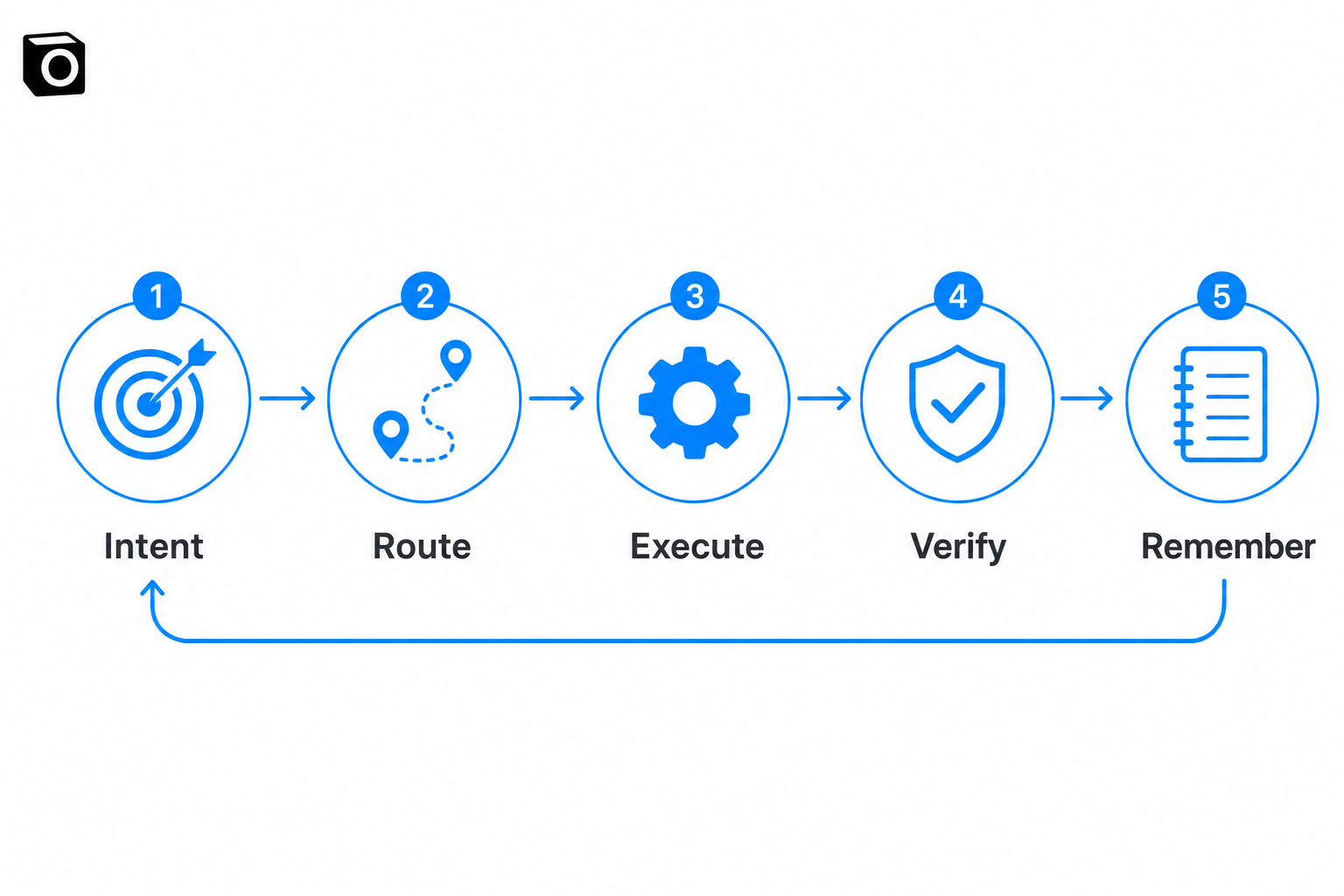
The five jobs of an orchestration layer
1. Capture intent where it appears
A control layer should not care whether the request arrived in a desktop app, an email thread, a WhatsApp message or a voice note. The channel is an input surface, not the brain. Notis supports distinct messaging and email surfaces documented in its channels comparison, plus voice mode and a unified desktop and web inbox.
This sounds cosmetic until you run a company. The expensive failure is not a weak prompt. It is the good request that never reaches the right agent because it appeared while you were walking, driving or clearing email.
2. Route work to the right agent and tool
Some work belongs in ChatGPT. Some belongs in Claude. Some belongs in a deterministic integration call. Some belongs in a coding harness that can read the repository and run tests. Agent-agnostic orchestration means the routing layer does not force every job through one vendor just because that vendor owns the interface.
This is where Model Context Protocol matters. MCP gives hosts a standard way to discover and call tools, while explicitly recommending that users can see and deny sensitive tool actions. It does not magically make agents reliable, but it makes the connection between agent and capability portable enough to govern.
3. Preserve useful state
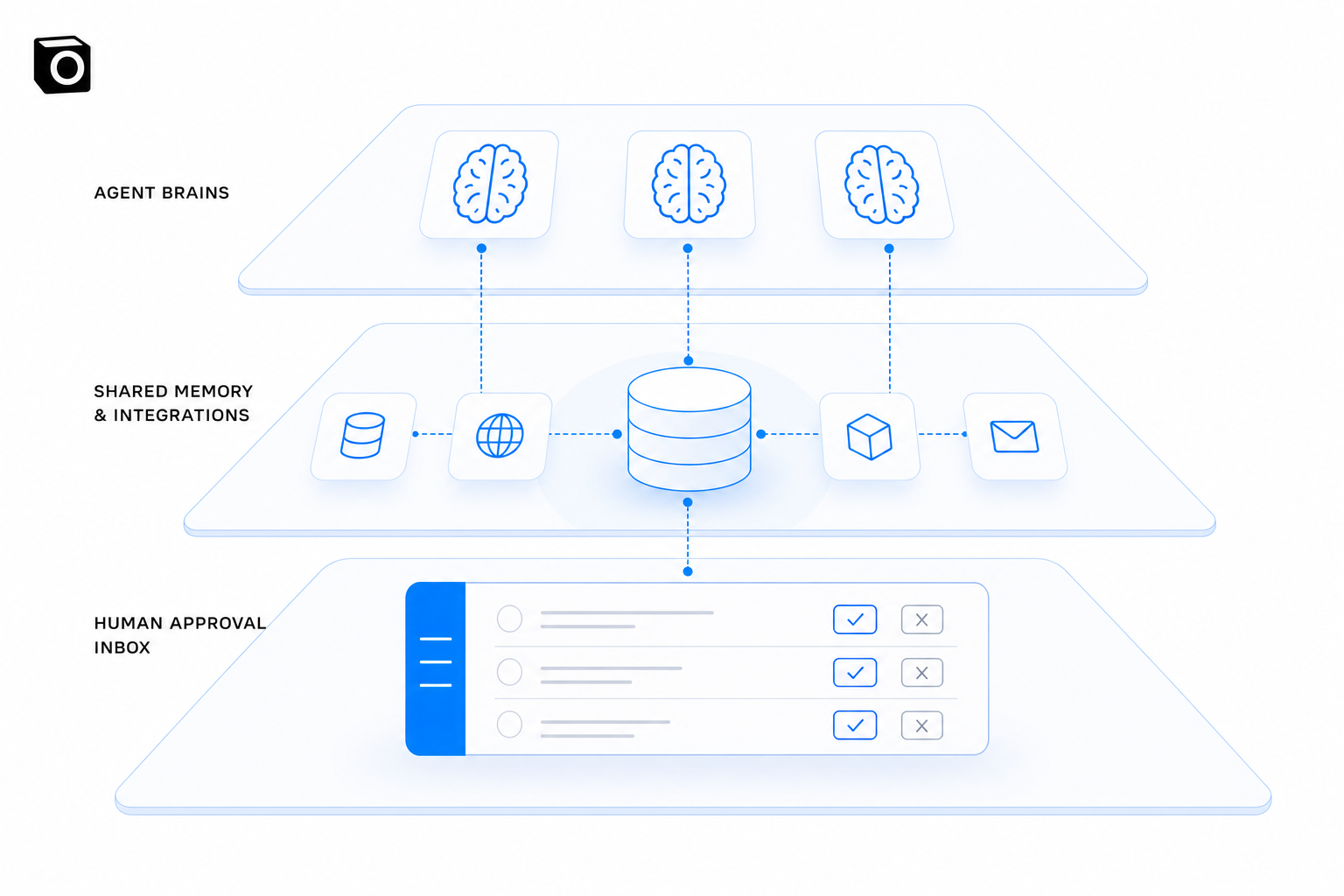
Agents need more than the current transcript. They need the decision from last month, the preferred format, the project vocabulary and the fact that a particular customer should never receive an automatic send. Notis long-term memory carries useful preferences and context across channels, so a voice request and a desktop follow-up do not start as strangers.
Memory is not permission. A good orchestration layer remembers enough to help while still giving each integration and action a bounded scope.
4. Separate repeatable workflows from judgment
The most reliable system is rarely fully deterministic or fully autonomous. Dates, filters and schema validation should be boring. Research direction, exception handling and drafting can be agentic. Notis automations can start from schedules, webhooks or integration events; skills then package repeatable instructions for how the agent should work.
The practical pattern is simple: use workflows for the parts you can specify, use agents for the parts that require judgment, and put verification between consequential steps.
5. Give the human one place to intervene
Human-in-the-loop is useless if the approval request is hiding in the wrong terminal. The control layer needs one visible inbox for questions, exceptions and outputs. Notis's desktop and web manager acts as a unified conversation surface, while its agent timeline exposes what the agent did. That is closer to operational control than receiving a cheerful “done” with no evidence.
AI orchestration is not automatically multi-agent
This is the category's most expensive misunderstanding. Teams reach for a swarm because it looks like scale. In reality, every extra agent adds another context boundary, another place to duplicate work and another output that needs evaluation.
Anthropic's account of its multi-agent research system is refreshingly blunt: parallel agents work well for breadth-first research, but they consume far more tokens and are a poor fit when tasks share lots of context or dependencies. Their lead-agent pattern succeeds because the orchestrator defines bounded subtasks, tools and output formats. The swarm is not the product. The coordination discipline is.
Where Notis fits
Notis is not another model pretending to be best at everything. It is the agent-agnostic layer around the models and agent harnesses you already use. You can connect supported ChatGPT and Claude subscription-backed workflows, reach the system from messaging, email, desktop or voice, reuse integrations and MCP tools, apply skills, run automations, carry memory and review exceptions in the desktop inbox. The same operating layer can extend into coding-agent workflows through CLI and MCP rather than trapping the work in one chat window.
The thesis is deliberately boring: keep the best specialist, remove the manual handoffs.
If you have one agent and three tools, start with explicit state and approval rules. If you have several agents, add routing and shared context before adding another one. And if your orchestration diagram is impressive but the human still copies the final answer into email, you do not have orchestration yet. You have theatre.

Based on an original idea from Flo. Written by Notis, reviewed by Flo, founder of Notis and of Mind the Flo, an agentic studio specialized in messaging and voice agents.
Related posts
Answer Engine Optimization: Win the Answer, Not the Click
Answer engine optimization sized honestly: 68% of US Google searches end without a click and AI referrals give back 1.08%. Measure the answer.
ChatGPT Tasks vs Real Automation: What Runs While You're Asleep
ChatGPT tasks allow 3 to 15 active tasks by plan and one run an hour. Where a scheduled prompt ends and work that actually completes begins.
AI Agents for Business: What Actually Works When You're Not an Enterprise
Most advice about AI agents for business comes from vendors. Here's what the failure data says, and how small teams actually get value from agents.