


Best AI Chat Apps for Founders in 2026: Conversation Isn’t Delegation
The best AI chat app is not necessarily the one with the smartest answer. For founders, the real test is whether it can move work across email, calendar, C
Most lists of the best AI chat apps are really lists of models with nice interfaces. That is useful if your job ends when the answer appears. A founder’s job usually starts there. The email still needs sending, the meeting needs booking, the CRM needs updating, and the task needs following up when nobody replies. So the useful question in 2026 is not “Which chatbot sounds smartest?” It is “Which AI chat app can turn a messy instruction into verified work without making me become its project manager?” That change in the question separates a clever conversational tool from an actual AI intern.
What counts as an AI chat app now?
An AI chat app is a conversational interface to a model, your files, and increasingly your business tools. ChatGPT can extend into business workflows through plugins and connectors. Claude offers connectors that bring external services into a conversation. The category is moving beyond “ask a question, receive text.”
But access is not execution. A tool can read a document and still leave you copying its answer into three other apps. It can draft a follow-up and still depend on you to remember to send it. The interface feels productive because the conversation is fluid, while the operational work quietly remains yours.
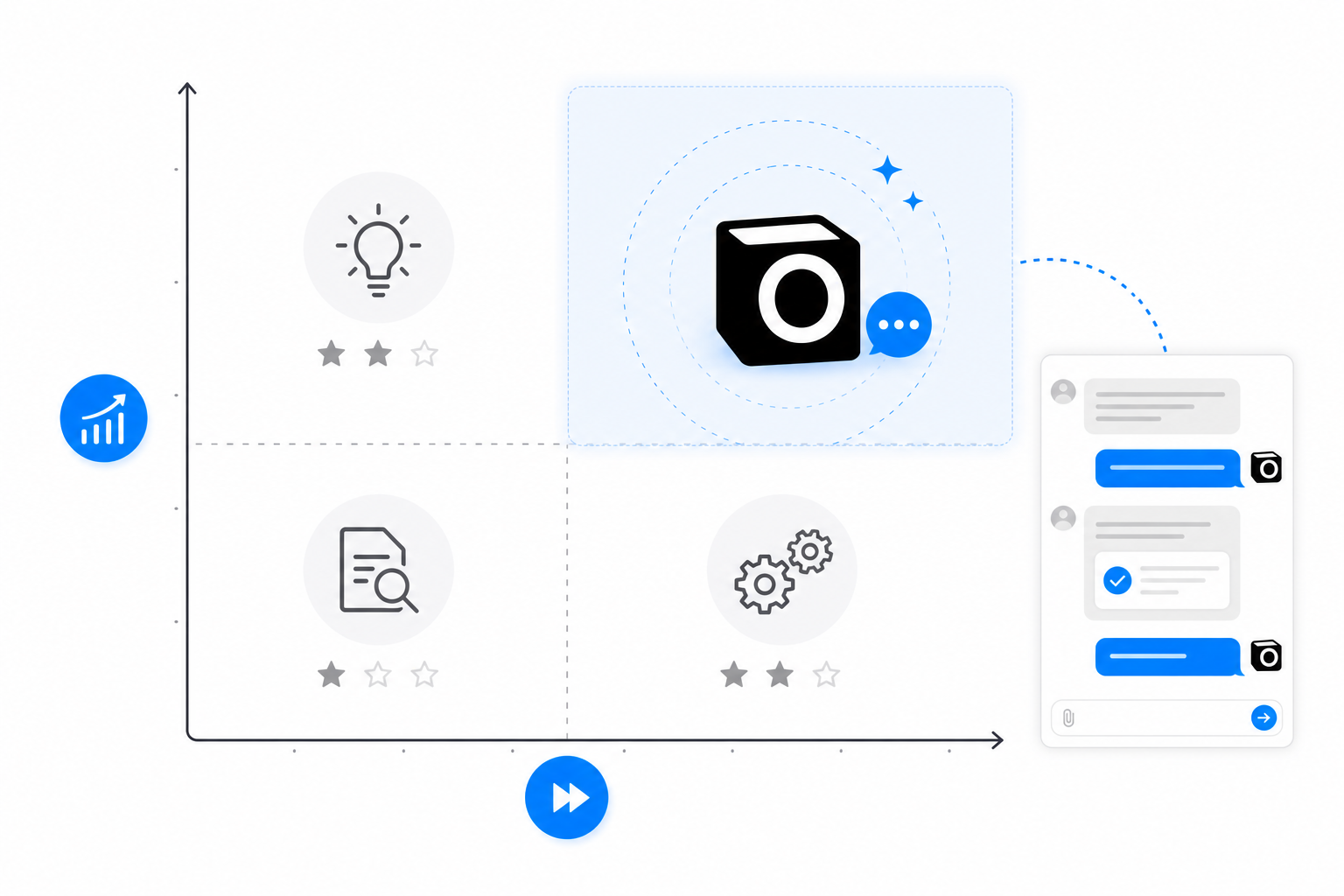
The four tests I would use before choosing one
Can it work where you already communicate?
A new AI tab is still a new tab. If the assistant only works when you remember to open its app, it competes with Slack, email, WhatsApp, your browser, and whatever fire is currently winning. A messaging-native assistant removes that recall step. You can delegate from the channel already open on your phone or computer. Notis takes this literally. Its channel guide covers WhatsApp, Telegram, Slack, iMessage, email, and the web experience. The point is not channel novelty. The point is lowering the friction between noticing work and delegating it.
Can it act across your actual stack?
A useful founder assistant should be able to move between your calendar, inbox, project system, CRM, documents, and databases. Reading those systems is the minimum. The stronger test is whether it can create the event, prepare the draft, update the record, and return proof of what changed.
Does it remember enough context without becoming reckless?
You want the assistant to remember stable preferences, ongoing projects, and the way you work. You do not want it confidently inventing context from six months ago. Good memory is selective. Good execution is bounded. The assistant should distinguish between retrieving information, preparing an action, and performing an irreversible action.
Does it close the loop?
This is where many AI chat apps fall apart. They produce a plausible plan and call it done. A founder does not need more plans. You need a result, an exception, or a clear request for approval. “I drafted the email” is different from “The draft is in Gmail, here is the link, and I will remind you tomorrow if it remains unsent.”
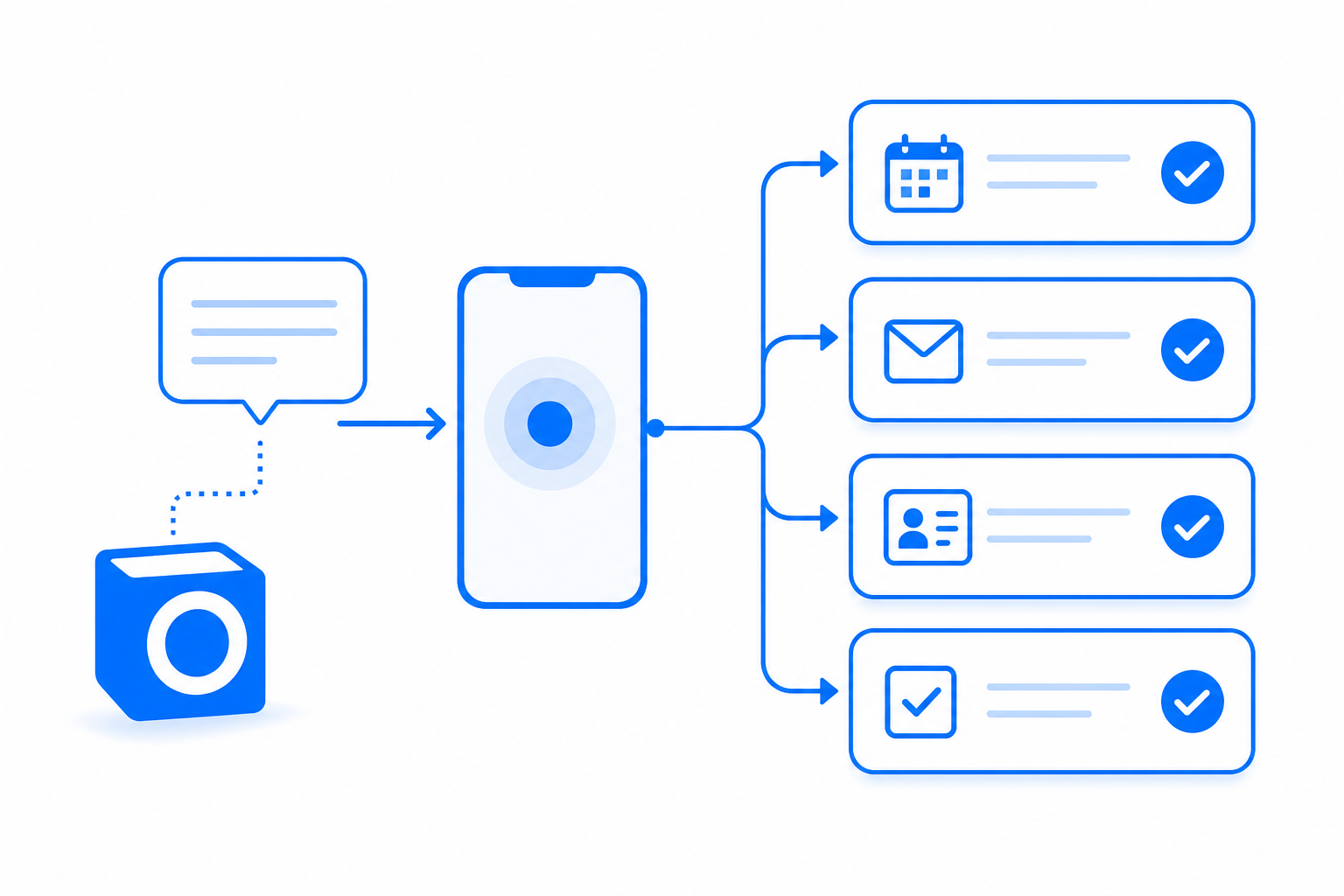
Which type of AI chat app is best for you?
Choose a general-purpose chatbot if your main work is thinking: research, writing, coding, analysis, or exploring unfamiliar subjects. The broad model ecosystem matters, and a dedicated interface can be an advantage when you want a large canvas and deliberate focus. Choose a document-first assistant if your bottleneck is long contracts, reports, policies, or complex source material. Strong document handling beats a hundred shallow integrations when the real job is understanding one difficult file. Choose a messaging-native AI assistant if your bottleneck is follow-through. This is the founder who thinks of tasks while walking, receives requests across several channels, and loses time translating decisions into actions. In that case, the value is not another place to chat. It is an execution layer that follows you into the places where work arrives.
Why founders should separate intelligence from interface
Models will keep leapfrogging each other. Betting your whole workflow on whichever one wins this month is exhausting. The more durable decision is the interface and operating model around the model: where you can reach it, what context it can retrieve, which tools it can use, how it asks for approval, and how it proves completion. This is why I prefer thinking in terms of an AI intern. An intern is not valuable because they can discuss your pipeline beautifully. They are valuable because you can say, “Prepare tomorrow’s meeting, check the last email thread, draft the follow-up, and put the open questions in my notes,” then review the work instead of rebuilding it yourself.
A simple trial before you commit
Give each candidate the same real assignment. Use one task that crosses at least two systems and has a visible finish line. Ask it to prepare a meeting from your calendar and inbox, turn the findings into a short brief, create the follow-up task, and show you what it changed. Do not grade the prose first. Grade the number of manual steps left for you. If the tool gives you a brilliant answer but leaves five tabs of clerical work, you tested a chatbot. If it completes the bounded workflow, surfaces uncertainty, and returns evidence, you may have found an AI assistant worth keeping.
The best AI chat app is the one that disappears into the work
For some people, that will be a powerful general chatbot. For others, it will be a document specialist. For a solo founder juggling operations, sales, meetings, and product, the better fit is often a messaging-native assistant that behaves less like a search box and more like a careful intern. Conversation is pleasant. Delegation is leverage. Pick the tool that gives you more of the second.

Flo is the founder of Mind the Flo, an Agentic Studio specialized into messaging and voice agents.
Related posts
Fireflies AI Alternatives: 7 Meeting Tools Compared on Price, Limits and Licence
Fireflies charges per seat but meters its AI on a team-wide credit pool that does not grow with headcount. Seven alternatives compared on what the price is actually charged against, every number sourced from the vendor's own pages.
Lindy AI Review: What It Costs, What It Is Good At, and Where It Breaks
A Lindy AI review with real pricing, what it is genuinely good at, the complaints that show up in independent reviews, and who should skip it.
Myyna vs. Notis: Which WhatsApp AI Assistant Fits Your Business?
Compare Myyna and Notis, WhatsApp AI assistants: Myyna suits team group operations with read‑only data access, while Notis offers personal, cross‑tool exec