


The Messaging-First Wedge: What’s Actually Working for Notis Right Now
Notis is a messaging-first AI assistant designed to enhance productivity by integrating with Notion databases, allowing users to interact seamlessly through familiar messaging platforms. Currently at $1k MRR, Notis aims to expand its capabilities and distribution channels while addressing platform dependency challenges.
I’ve had a bunch of conversations lately that sound deceptively simple on the surface: “So what is Notis, really?” The longer I build, the more I realize the answer isn’t a feature list. It’s a wedge.
Notis is built around a belief that most of your work doesn’t happen inside your tools. It happens in the moments between them. In your messages. In the voice note you send while walking to the train. In the quick thought you’d normally lose because opening Notion feels like “work.”
The wedge: messaging-first, not doc-first
If you only take one thing from this post, take this: Notis is a messaging-first AI assistant that can query and work with your Notion databases.
That might sound like semantics, but it changes everything about adoption. Notion AI is powerful inside the editor. Notis lives where you already are: Telegram today, WhatsApp when the platform behaves, Raycast when you’re in builder mode, and soon email.
When you build around messaging, you stop fighting user behavior. You stop trying to convince someone to “go do the organizing.” Instead, you let them stay in motion, and you do the organizing for them.
Where we are right now (and why I’m optimistic)
Notis started in October 2023. I bootstrapped it, and I’m still self-funding salaries. That constraint forces clarity.
We’re currently at around $1k MRR. On paper, that’s tiny. In practice, the part that matters is the shape of the curve and the economics under it.
We can acquire paid users for less than their first-year value. That means the machine isn’t broken; it’s just early. And we’ve identified a clear path to $10k MRR. Not as a fantasy milestone, but as a set of very real levers: distribution channels that already show signal, and product surfaces that reduce friction.
The product surfaces that matter
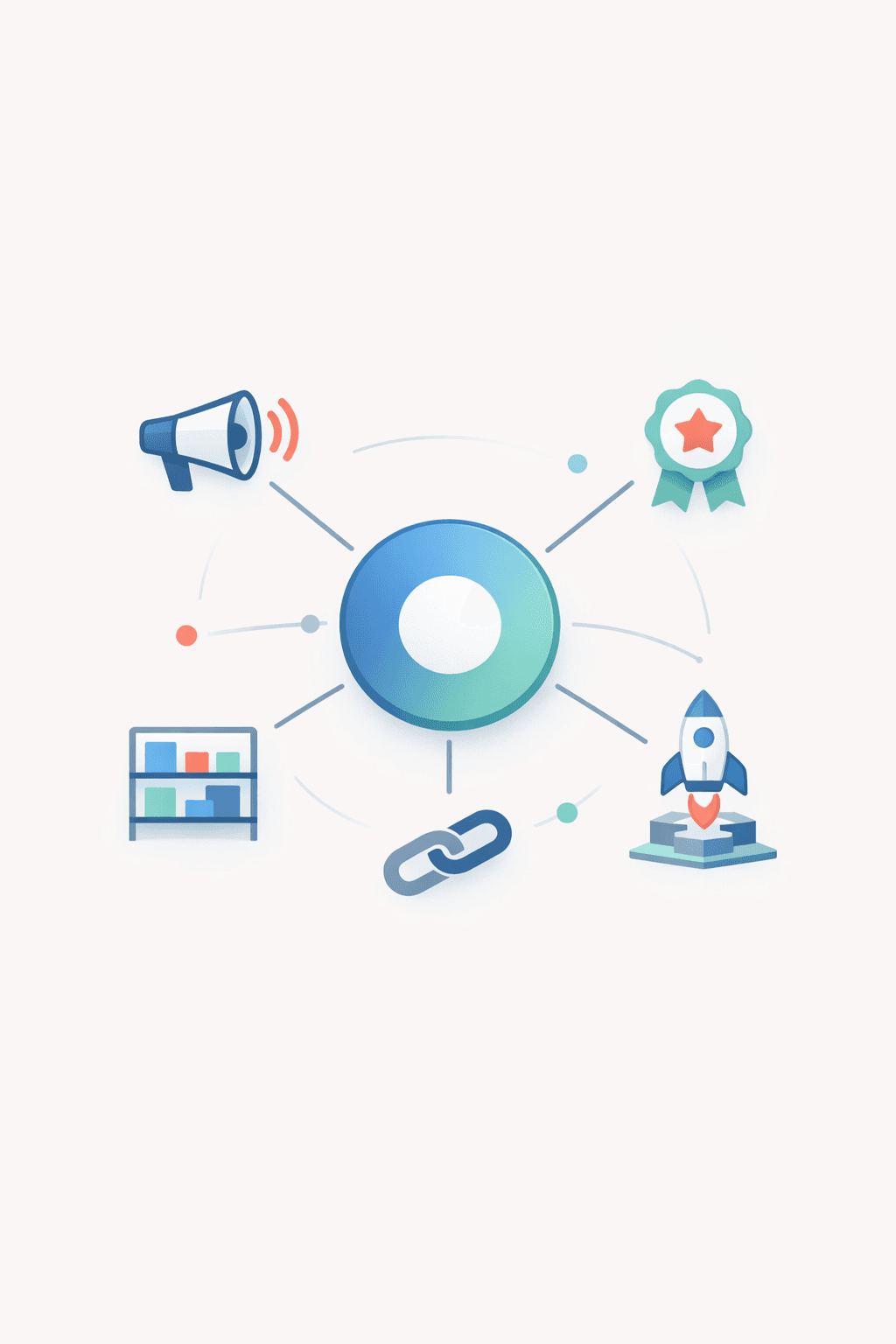
The core product is an AI messaging layer integrated with Notion.
We have an API in beta. We shipped a Raycast integration. Email is coming soon.
Those sound like “integrations,” but what they really are is redundancy and reach. Different users want different entry points. The messaging-first idea stays the same; the doorway changes.
Distribution is a pile of experiments (and that’s the job)
In one of my recent chats, we listed what we’re doing on growth and it looked like chaos. It’s not. It’s the reality of early-stage.
We’re targeting Notion users through an ambassador program. We’re scraping Product Hunt for startups that clearly run on Notion. We’re running an aggressive Twitter strategy that makes the comparison obvious: Notis can query your Notion databases from chat in a way Notion AI simply doesn’t.
We’re also building a template marketplace and developing an affiliate program.
None of these are “the channel.” They’re probes. You ship them, watch what moves, and then you double down.

The uncomfortable truth: platform dependency is real
The main risk for Notis is also the reason the product works so well: we’re deeply tied to Notion’s API.
If you build on top of a platform, you inherit its constraints. Rate limits, missing endpoints, policy changes, or just plain instability can become your problem overnight.
We’ve already felt that on the messaging side too, with WhatsApp being briefly unavailable. That experience hardens you fast. It pushes you toward building a product that can survive a channel wobble without dying.
The roadmap: from “Notion copilot” to “life admin agent”
The near-term roadmap is straightforward: keep reducing friction and keep expanding the moments where Notis can catch your intent.
Email integration is the next obvious step.
Beyond that, I’m excited about a calendar agent for meeting scheduling, and the kind of everyday tasks that don’t feel like “productivity,” but absolutely are: restaurant booking, coordination, and the small logistics that quietly drain your week.
Longer term, the plan is to integrate with other knowledge management platforms too. Not because we want to be everything for everyone, but because platform dependency cuts both ways. If we can bring the messaging-first copilot to more backends, we get resilience and a bigger surface area.
Voice agent capabilities also sit in that same direction. Messaging is already the most natural interface for most people. Voice makes it even more default.
A quick note on hiring and reality
I’m looking for generalists who are comfortable with AI tools and who don’t need a map to move. That’s not a “hustle culture” pitch. It’s just the nature of building something from scratch.
The honest constraint is cash. I’m self-funding salaries right now, and I care about paying a living wage while we build value. Remote work and location arbitrage help. Equity helps. Clarity helps most.
If you’re reading this and you’re the kind of person who likes to run toward ambiguity, this is the season where you can make a disproportionate impact.
What I’m watching next
I’m watching for one thing: whether our messaging-first wedge keeps compounding.
If we keep improving the product so it feels effortless, and if one or two of these distribution probes turn into repeatable channels, the $1k MRR stage becomes a footnote.
That’s the fun part of building. The early numbers are small, but the direction is loud.

Flo is the founder of Mind the Flo, an Agentic Studio specialized into messaging and voice agents.
Related posts
Why Calendar Integrations Are So Hard to Nail (and Why Reliability Is the Real Product)
This article explores the complexities of calendar integrations, emphasizing that reliability is the key feature rather than just a simple function. It discusses the importance of treating the calendar as the system of record, the challenges of syncing across time zones and changes, and the significance of designing for operational resilience. The author advocates for a user-centric approach in building scheduling solutions, ensuring that they handle failures gracefully and maintain consistency, ultimately enhancing user experience.
Constraints are the product: what building Notis on WhatsApp taught me about AI, cost, and roadmap
This blog discusses the development of Notis, an AI assistant on WhatsApp, emphasizing the importance of constraints in product design. It highlights the advantages of using WhatsApp, the architecture of Notis, the realities of unit economics, and ongoing pricing experiments. The author reflects on the future roadmap, focusing on multi-platform connections, communication channels, and vertical expansion. Ultimately, the takeaway is that constraints enhance clarity and improve the product's effectiveness.
Why Smart Founders Skip Investors and Hire AI Agents Instead
Founders skip investors, using AI agents for rapid, multiplied output, saving time and capital while reshaping startup operations.