


6 n8n Alternatives That Fix the Licence or the Bill (2026)
Six real n8n alternatives, ranked on the two things that actually make people leave: the Sustainable Use Licence and per-execution billing. Prices quoted from vendor pages, licences read from the repos.
There are only two reasons anyone searches for n8n alternatives, and they have nothing to do with features.
The first is the licence. n8n is fair-code, not open source, and people usually find that out after they have built something. The second is the bill, which is charged per workflow execution and therefore grows with how often your automations run rather than with how much value they produce.
Almost every list you will find on this query ignores both and ranks on integration counts instead. So this one starts with the licence, quotes prices from the vendors' own pages, and says plainly which tool replaces n8n and which one replaces the job you were using n8n for. Those are different answers.
First, the licence thing
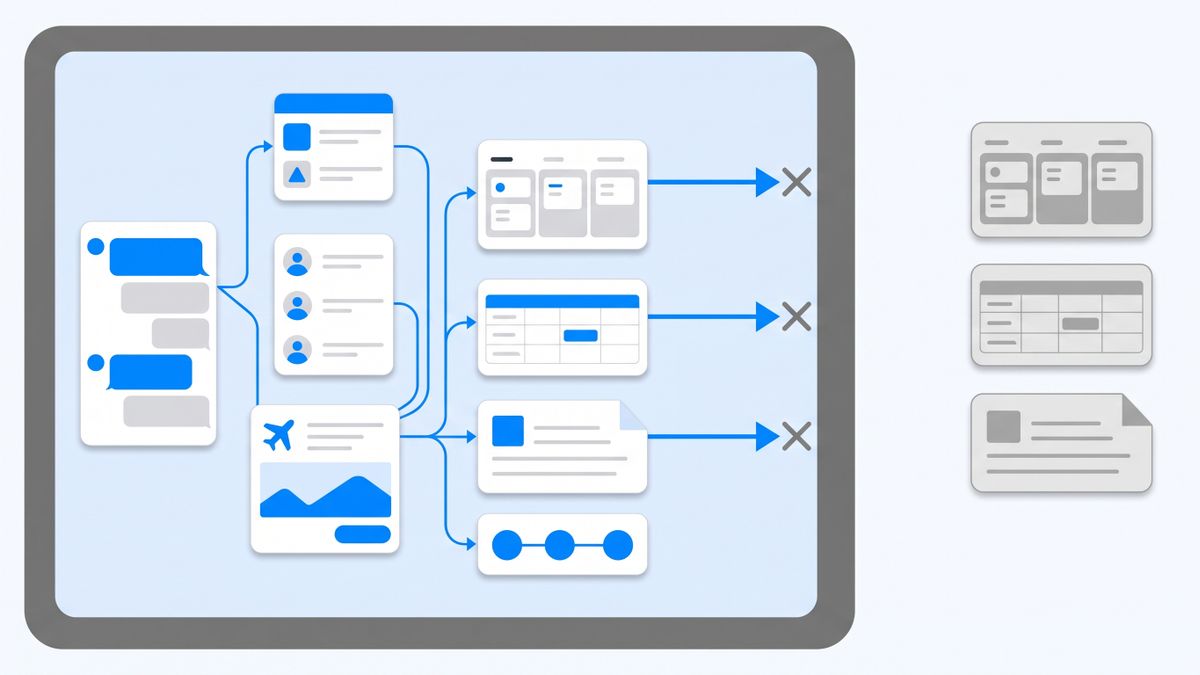
n8n is distributed under the Sustainable Use License, Version 1.0. The operative sentence is short: you may use or modify the software "only for your own internal business purposes or for non-commercial or personal use", and you may distribute it to others "only if you do so free of charge for non-commercial purposes".
For most teams that is completely fine. You are automating your own operations, which is exactly what internal business purposes means. It matters if you intended to host n8n for clients, wrap it inside something you sell, or build a product on top of it. That is not permitted, and no amount of self-hosting changes it.
If that clause is why you are here, you want a genuinely OSI-licensed tool, and only three below qualify.
How I picked these
Four criteria, applied in order:
- Licence — is it OSI open source, fair-code, or proprietary. Checked in the repository, not the marketing page.
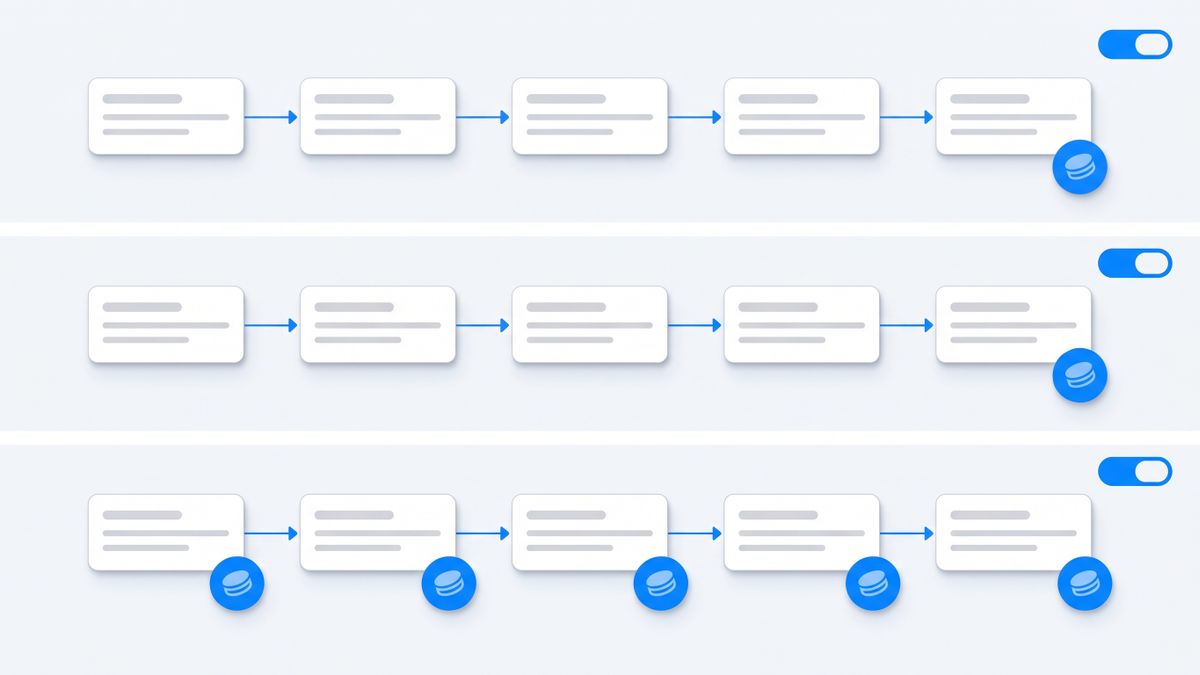
- What the price is charged against — executions, operations, tasks, credits, or compute time. This is what decides your bill at scale, and the four words are not interchangeable.
- Self-hosting — genuinely available, or cloud-only.
- Who has to build the workflow — you, or the tool.
Prices are the vendors' published figures, checked on 25 August 2026. Several are annual-billing rates that read lower than what you pay monthly; where that is true, it is stated.
The short version
- Activepieces — the closest true open-source replacement. MIT licensed.
- Windmill — for teams who would rather write code than drag nodes.
- Node-RED — the original, Apache 2.0, run by a foundation rather than a company.
- Make — the cheapest cloud option if you are done with self-hosting.
- Zapier — the most integrations and the highest bill.
- Notis — the option where nobody builds a workflow. Ours, and a different shape entirely.
1. Activepieces — the closest genuine open-source replacement
If the licence is your reason for leaving, this is the first one to try. Activepieces is MIT licensed, which places no restriction on commercial use, hosting for clients, or building a product on top of it. That is the specific freedom the Sustainable Use License withholds.
The Community Edition is free, self-hostable, and carries no usage caps — though it leaves out Agents, Projects and the administrative controls. Cloud pricing runs Free, then Plus at $16/month and Team at $166/month (both billed yearly), with Ultimate custom and an Embed tier from $36,000/year.
The billing model is worth understanding because it is the opposite of n8n's. A flow run costs one credit regardless of how many steps it contains. Under n8n's execution pricing a twelve-step workflow and a two-step workflow cost the same too — but under Zapier's task pricing they very much do not. If you migrated from Zapier to n8n to escape per-task billing, Activepieces preserves that win.
Pick it if: you need a licence that lets you do what you want, and you liked n8n's shape.
2. Windmill — if you would rather write the code
Windmill is open source and self-hostable in Docker, Kubernetes or Fargate. The free tier gives unlimited executions, capped instead at 3 workspaces and 10 SSO users. Enterprise starts at $120/month and is priced by workers rather than by runs.
That pricing axis is the real difference. n8n charges you for how often things happen; Windmill charges you for the capacity you keep running. If you have a small number of very high-frequency automations, this inverts your bill in a good way. If you have many rarely-firing ones, it does the opposite.
The honest catch: this is a developer tool. The visual builder exists, but the centre of gravity is scripts in TypeScript, Python, Go and Bash. A non-technical operator who was happy in n8n's canvas will not be happy here.
Pick it if: your team writes code anyway and execution-count billing is what broke.
3. Node-RED — the one that predates the whole category
Node-RED has been around since 2013, was built at IBM, and is now a project of the OpenJS Foundation under the Apache 2.0 licence. It is free, with no commercial tier and no vendor who can change the terms later — which, if the licence is your grievance, is the strongest possible answer to it.
Over 5,000 community-contributed nodes are available through its flow library. It runs on anything from a Raspberry Pi to a cloud instance.
What you give up is everything a commercial vendor provides: no managed hosting, no support contract, no polished credential management, and an interface that looks its age. It is also weighted towards event and hardware flows rather than SaaS-to-SaaS plumbing, so the integration you want may exist as a community node of uncertain maintenance.
Pick it if: foundation governance and a permissive licence matter more than convenience.
4. Make — the cheapest way to stop self-hosting
Make is cloud-only, so this is the wrong entry if the licence brought you here. It is the right one if what you actually want is to stop maintaining a server.
Pricing is Free (1,000 credits, 2 active scenarios, 15-minute minimum interval), then Core at $9/month, Pro at $16/month and Teams at $29/month — all three at 10,000 credits, with the tiers differing on execution time, file size and API rate limits rather than volume.
Compare that to n8n Cloud, which starts at €20/month for 2,500 executions and reaches €667/month at 40,000. Make's paid entry is cheaper and its included volume is four times larger. The free tier's 15-minute minimum interval is the catch that pushes most people to Core.
Pick it if: you want managed hosting and the lowest bill, and can live with cloud-only.
5. Zapier — the most integrations, and you will pay for them
Zapier is the one everyone knows and the one most people leaving n8n already left. It is cloud-only and bills per task, where a task is a single action inside a run — so a twelve-step Zap costs roughly six times what a two-step Zap costs for the same trigger.
Free gives you 100 tasks/month. Professional starts at $19.99/month on annual billing for 750 tasks, which is $29.99 if you pay monthly. Team starts at $69/month annual for 2,000 tasks. Tiers scale to 2,000,000 tasks.
Read those numbers next to Make's 10,000 credits at $9/month and the reason n8n exists becomes obvious. What Zapier still wins on is catalogue breadth and the maturity of its connectors — if your workflow depends on one obscure SaaS tool, Zapier is likeliest to have it and likeliest to have kept it working.
Pick it if: a specific integration exists nowhere else, and you have priced the tasks honestly.
6. Notis — when the answer is that nobody should build the workflow
Full disclosure: Notis is our product. It is last on this list because it is the least like n8n, not because it is the least good.
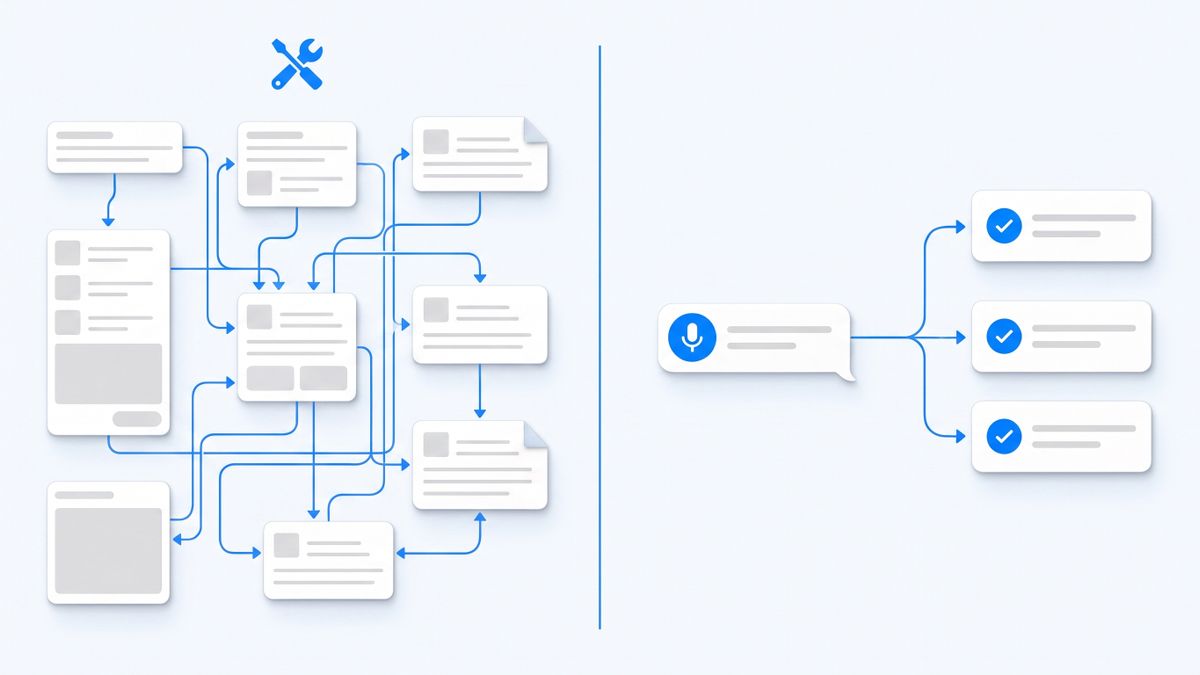
Every tool above assumes the same thing: someone designs a workflow in advance, and the tool runs it. That assumption is correct for high-volume repetitive work and wrong for the long tail — the jobs that happen weekly, change shape each time, and are never worth an afternoon of building.
Notis takes those from a message. You send a voice note or a sentence from WhatsApp, iMessage, Telegram, Slack or email, and it does the work across the tools behind your business. There is no canvas, no nodes, and nothing to maintain when a vendor changes an API. Pricing is Free to $149/month.
The honest limitation is the mirror image of the honest strength. If you need deterministic branching, precise data transforms, and a graph you can inspect when something fails at three in the morning, you want n8n or one of its real replacements above. Notis removes the need to become a builder; it does not remove the need for a builder when you genuinely have one.
Pick it if: you were using n8n for delegation rather than for engineering, and resented the building.
Which one should you choose?
- The licence is the problem — Activepieces first, Node-RED if governance matters more than polish, Windmill if you write code.
- The execution bill is the problem — Make if you want managed and cheap, Windmill if your automations are high-frequency and worker-based pricing suits them better.
- Self-hosting is the problem — Make or Zapier, and price the tasks before committing.
- Building the workflows is the problem — none of the first five will fix that, because they all share n8n's core assumption. That is the gap Notis fills.
My verdict
For most people leaving n8n over the licence, Activepieces is the answer: same shape, MIT licence, and a billing model that does not punish long workflows.
For most people leaving over the bill, Make is the answer, and the gap is not close — $9/month for 10,000 credits against €20/month for 2,500 executions.
And it is worth asking the question underneath the search. n8n is a tool for building systems. If you went looking for it because you wanted work to happen and not because you wanted to build a system, no alternative on this list solves that, because they are all the same tool with different licences and different bills.
Sources and research notes
Licence terms were read from the projects' own repositories: the n8n Sustainable Use License, Version 1.0 and the Node-RED repository (Apache 2.0, OpenJS Foundation). Prices come from the vendors' own pricing pages, checked on 25 August 2026: n8n, Activepieces, Windmill, Make and Zapier. Node-RED background is from nodered.org.
Prices and limits change, and several vendors quote annual-billing rates by default. Verify the current plan before buying. Notis is our own product and is disclosed as such in its entry above; every other tool here is listed on what its vendor publishes, including where that is better than ours.

Flo is the founder of Mind the Flo, an Agentic Studio specialized into messaging and voice agents.
Related posts
Zapier Alternatives: 7 Tools Compared by What They Actually Bill You For
Zapier counts every completed action as a task, so a five-step Zap costs five times a one-step Zap on the same trigger. Seven alternatives compared by the unit each one meters: operations, executions, flow runs, compute seconds, workers and enabled Applets.
Codex CLI: What It's Good At (and What It Isn't)
An honest read on Codex CLI: the repo loop and codex exec it nails, the five-hour windows and non-code jobs it cannot touch, and what to run beside it.
Manus AI Pricing: What Credits Really Cost Per Task
Manus credits cost $0.005 each, so its own published examples run $1.00 to $4.50 a task. The real math, and why I price in dollars instead.