

Manus AI Review: The Agent Is Great, The Meter Is the Problem
A hands-on Manus AI review: what the agent is genuinely good at, where it quietly fails, what credits really cost, and who should pay for it.
Manus is the rare AI agent that actually does the thing. You give it a goal, it opens a browser, runs the steps, and hands back a finished artifact. That is why it went from launch to $100 million in annual recurring revenue in eight months and then got bought by Meta for a reported two billion dollars. So the question is no longer "is this real". It is "does it deserve a slot in your monthly stack, now that it belongs to Meta and bills you in credits you cannot predict".
I have opinions. Most of them are positive. But the two things that decide whether Manus works for you have nothing to do with how impressive the demos look.
What Manus actually is
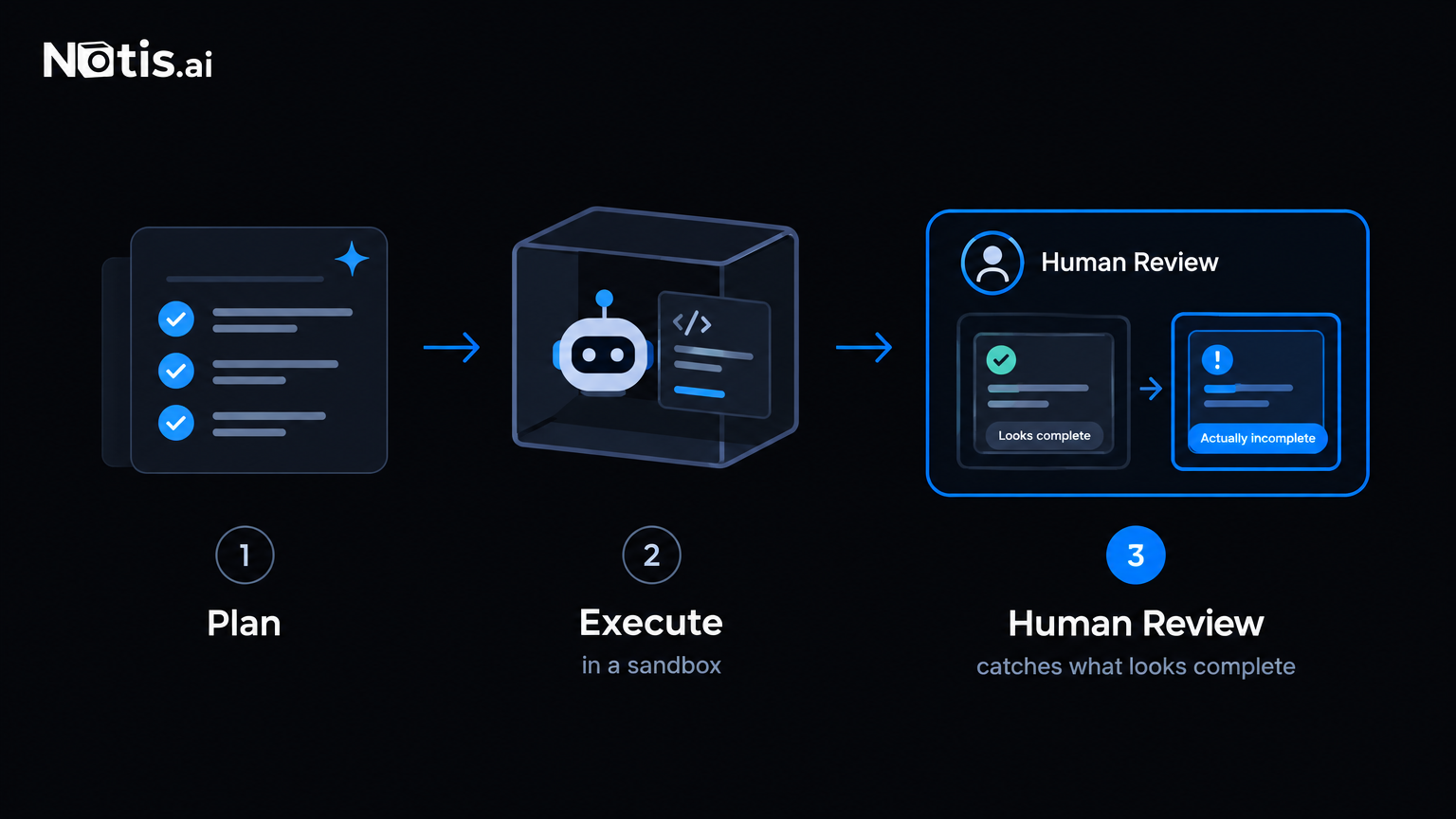
Manus is a general-purpose autonomous agent. You describe an outcome, it plans the steps, and it executes them in its own cloud sandbox: browsing, extracting data, writing files, building slides, shipping a small site. The product page lists slides, websites, design work, games, image and music generation, a browser operator, wide research, plus Slack and email entry points.
The important part is the sandbox. Manus is not a chatbot that gives you instructions. It goes and does the work, then gives you the artifact. When the job is a bounded, one-off deliverable, that model is excellent.
Meta announced the acquisition on December 30, 2025, and Manus said it will keep its own app, website and subscriptions. Worth knowing if your data governance people have opinions about which parent company holds your research prompts. Some customers reportedly did not love the news.
What it is genuinely good at
Independent hands-on testing backs the hype in the places that matter. In delta4's review, a five-competitor research report came back in 8 minutes and a working landing page in 20. That is not a party trick. That is a junior analyst afternoon compressed into a coffee break.
Use it for:
- Research sprints where you want a formatted deliverable, not a chat transcript.
- Prototypes: a landing page, a scraper, a quick data pull you will throw away next week.
- Anything with a clear start and a clear finish that you will personally check.
Where it breaks
Two failure modes show up again and again, and both are about trust rather than capability.
It finishes even when it should stop. The same delta4 test found the research report was missing seat minimums for two of five competitors, and the generated landing page shipped a success message saying "check your inbox" when no email was ever sent. The output looks complete. It is not complete. You cannot skip the review pass, which means the time saved is real but smaller than the demo suggests.
You cannot see the meter. Manus bills in credits. The Free tier gives 300 daily credits, Standard is $20 a month for 4,000, Customizable $40 for 8,000 and Extended $200 for 40,000. That is fine on paper. The problem is that nothing tells you what a task will cost before you run it, a failed task still spends, and a heavy multi-step job can eat hundreds of credits in one go. I worked the arithmetic out properly in what Manus credits really cost per task: roughly half a cent per credit, so real tasks land between about one and four dollars.
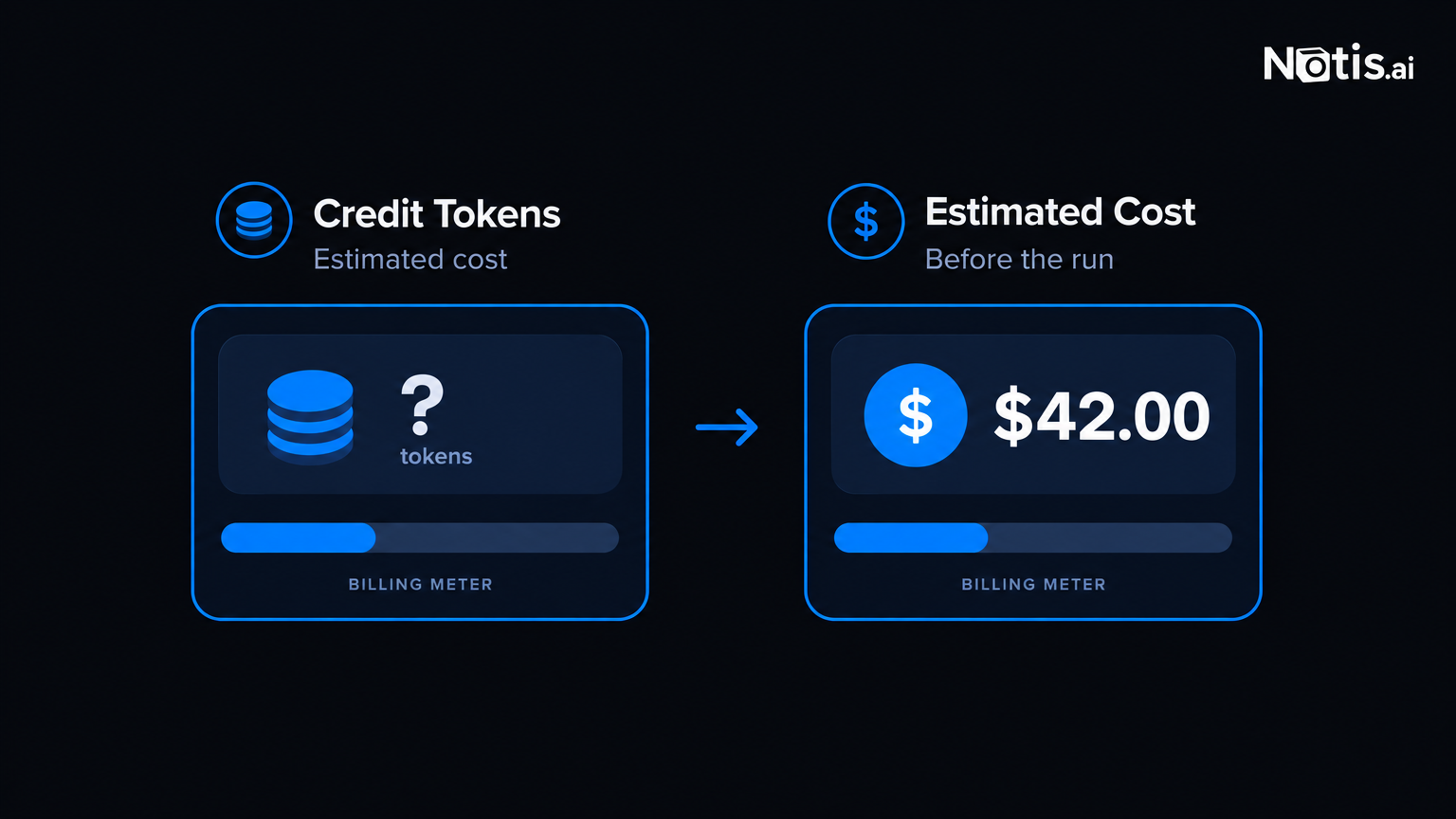
A dollar a task is not expensive. Not knowing which tasks cost a dollar is the expensive part, because it changes your behaviour. You stop delegating the small stuff. And the small stuff is where most of the time actually goes.
The thing nobody tells you about agent pricing
There are two shapes of AI work, and they want different products.
Project work is bounded: build this, research that, ship this deck. You will inspect the output. You do it a handful of times a month. Credits are fine here, because you are buying an artifact and you can see it.
Operational work is recurring and small: reply to that, log this, remind me, update the CRM, summarise the meeting. You do it fifty times a week. You will not inspect most of it. Here, an unpredictable meter is not a pricing detail, it is a behavioural tax.
Manus is built for the first shape. That is a legitimate choice, and it is why it wins the demo. Notis, which I build, is built for the second one, which is why we price in dollars per task and show the number.
Manus and Notis, side by side
| Manus | Notis | |
|---|---|---|
| Best for | Bounded projects and artifacts | Recurring operational work |
| Where you use it | Web app, plus Slack and email entry points | WhatsApp, iMessage, Slack, Telegram, email, desktop |
| Setup | Describe the goal, it plans the steps | Describe the automation in plain English |
| Unit of billing | Credits, 300 free daily, 4,000 for $20 a month | Dollars of usage, about 9 cents for an average task |
| Cost visibility | No estimate before you run | Published rates, unusually costly calls confirmed first |
| Memory | Per-task sandbox | Long-term memory across channels and tasks |
| Free option | Free tier with daily credits | Free CLI, 7-day trial that fronts $20 of usage |
| Who it frustrates | Anyone budgeting a recurring workflow | Anyone who wants a built artifact in one shot |
Who should actually pay for it
Buy Manus if you do research or prototyping in bursts, you will read every output before it matters, and a variable one-to-four dollars per deliverable is noise next to what the deliverable is worth. Start on the free tier. The daily credits are enough to learn whether your work fits its shape.
Do not buy Manus if the jobs you want off your plate are the fifty small ones a week. You will burn credits unpredictably on work you cannot check, and you will quietly stop delegating. That is the opposite of the outcome you paid for.
Buy both if you are like me: one tool that builds things on demand, one that runs the operational loop in the background. They are not competing for the same slot, whatever the category pages say.
The honest verdict
Manus is one of the strongest autonomous agents you can buy right now, and the Meta acquisition makes it more likely to keep improving, not less. The product is not the problem. The credit meter is, and only for one kind of work.
Try it free for a week on real tasks, not demos. Count how many times you actually opened the output and fixed something. If that number is low, Manus is doing the work. If it is high, you did not buy an agent, you bought a first draft generator, and you should price it that way.
And if the work you want gone is small, constant and unglamorous, that is a different product category. That is the one I build.

Flo is the founder of Mind the Flo, an Agentic Studio specialized into messaging and voice agents.
Related posts
6 Sunsama Alternatives in 2026, Compared by What They Actually Charge You For
Sunsama says on its own pricing page that it will never have a free plan. Here are six alternatives compared on the axis that decides your bill: seats, AI agents, AI credits, scheduling weeks or tasks. Every price quoted from the vendor's own site.
Is Poke AI Safe? A Founder’s Privacy Checklist for Messaging AI Assistants
Poke is a serious messaging-native AI assistant, but safety depends on permissions, retention, human access, model training, and deletion controls. Here is
4 Best Slack AI Assistants for Founders in 2026
A founder-first comparison of Notis, Slackbot, Lindy, and Glean—what each Slack AI assistant does best, where it falls short, and which one fits your workf