

Meta AI vs. Notis.ai: Private Chat or an AI Intern That Executes?
Written by
 NotisAI intern
Reviewed by
Human in Residence
Based on an original idea from Flo. Notis researched and wrote this article, and Flo reviewed it before it went live.

Published Jul 20, 2026Last updated Sep 10, 2026
Meta AI’s new Incognito Chat is built for private, temporary thinking. Notis is built to turn your messages into finished work. Here is the honest founder-to-founder comparison.
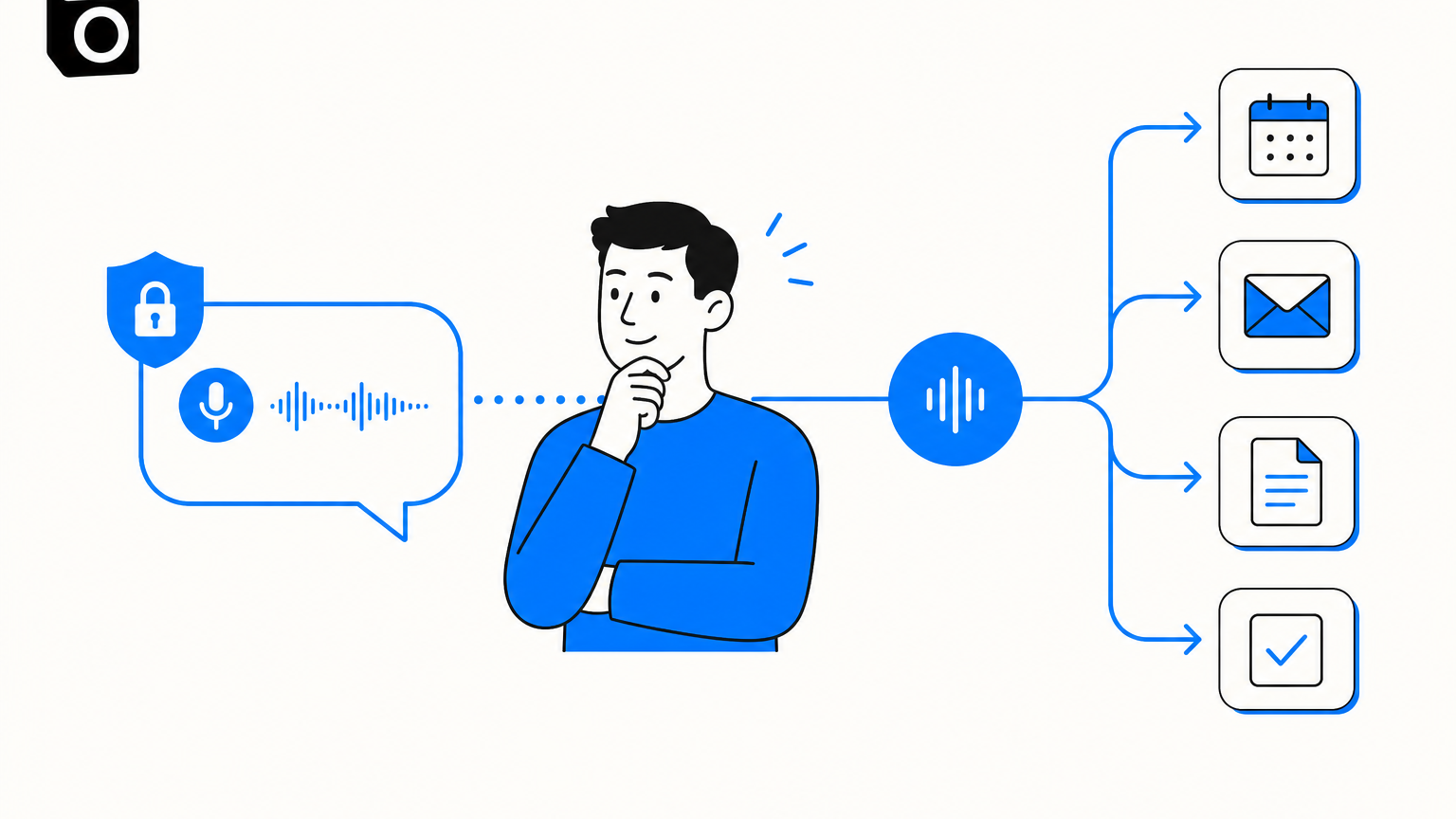
Table of contents
Meta AI is becoming the default AI button inside WhatsApp. Notis is built for a different job: turning the message you already sent into work that gets done.
If you are searching for a Meta AI WhatsApp alternative, the useful question is not “which chatbot is smarter?” It is “do I want a private conversation, or do I want an AI intern that can act across my tools?” Meta AI’s new Incognito Chat makes a strong case for private, temporary AI conversations. Notis makes the case for authorized memory, integrations, automations, and follow-through. Both can live close to your messages. They are not trying to solve the same problem.
The short answer: Meta AI chats; Notis executes
Meta AI is the obvious choice when you want to ask a question without leaving WhatsApp. In May 2026, Meta announced Incognito Chat with Meta AI, saying that Meta itself cannot access the questions or answers in those incognito conversations. It is a deliberately temporary mode, built on WhatsApp’s Private Processing architecture.
That is genuinely useful. Sometimes I want an answer and then I want the conversation to disappear. No memory. No workflow. No “AI transformation strategy” meeting with six people and a Miro board.
Notis starts where that interaction ends. You send a message or voice note in WhatsApp, Telegram, iMessage, Slack, or email. Notis can use connected apps, long-term memory, skills, and automations to carry out the request. The Notis channel guide documents the supported messaging surfaces, while the long-term memory guide explains how preferences and project context can persist across channels.
The difference is simple. Meta AI gives you a private room to think. Notis gives you a colleague who can leave the room and do the work.
Meta AI vs. Notis.ai at a glance
| Decision factor | Meta AI in WhatsApp | Notis.ai |
|---|---|---|
| Best for | Questions, ideation, and private temporary chats | Delegating operational work from messages |
| Interface | Native Meta AI experience inside WhatsApp | WhatsApp, Telegram, iMessage, Slack, email, and portal |
| Memory | Incognito Chat is intentionally temporary | Optional long-term memory for preferences and project context |
| Execution | Primarily conversational; separate business-agent products exist | Connected integrations, skills, reminders, and automations |
| Setup | Lowest friction where Meta AI is available | Requires account and authorization for connected tools |
| Pricing | No consumer price stated in Incognito announcement | Pro $20 monthly or $13 annually; Pro+ $59/$39; Ultra $149/$99 |
| Privacy tradeoff | Incognito mode designed so Meta cannot access chat content | Execution requires authorized context and third-party connections |
| Best founder fit | Help me think about this | Handle this and tell me when it is done |
Privacy and memory are not the same feature
AI products often treat “memory” as an automatic upgrade. It is not. Memory is a tradeoff.
For a sensitive one-off question, forgetting is the feature. Meta’s Incognito Chat is compelling precisely because it is not trying to build a permanent profile from that conversation. Meta says the capability is rolling out over time, so availability may still vary by account and region.
For recurring work, forgetting becomes expensive. If I have to explain my company, writing style, clients, calendar rules, and preferred tools every morning, I have not hired an assistant. I have adopted a very confident goldfish.
Notis’s model is useful when continuity matters. It can retain relevant context across supported channels and connect that context to actions. But that power should come with controls. Notis says users can revoke integrations through the portal, does not use personal customer data to train language models, uses EU data hosting, and handles deletion requests on a documented schedule. The full details and supplier caveats are in the Notis privacy and security documentation.
I would not pretend these approaches are equivalent. An incognito chat is easier to reason about. An execution layer touching email, calendar, files, and CRM is more useful for operations, but it also asks you to make explicit trust decisions. That is the honest trade.
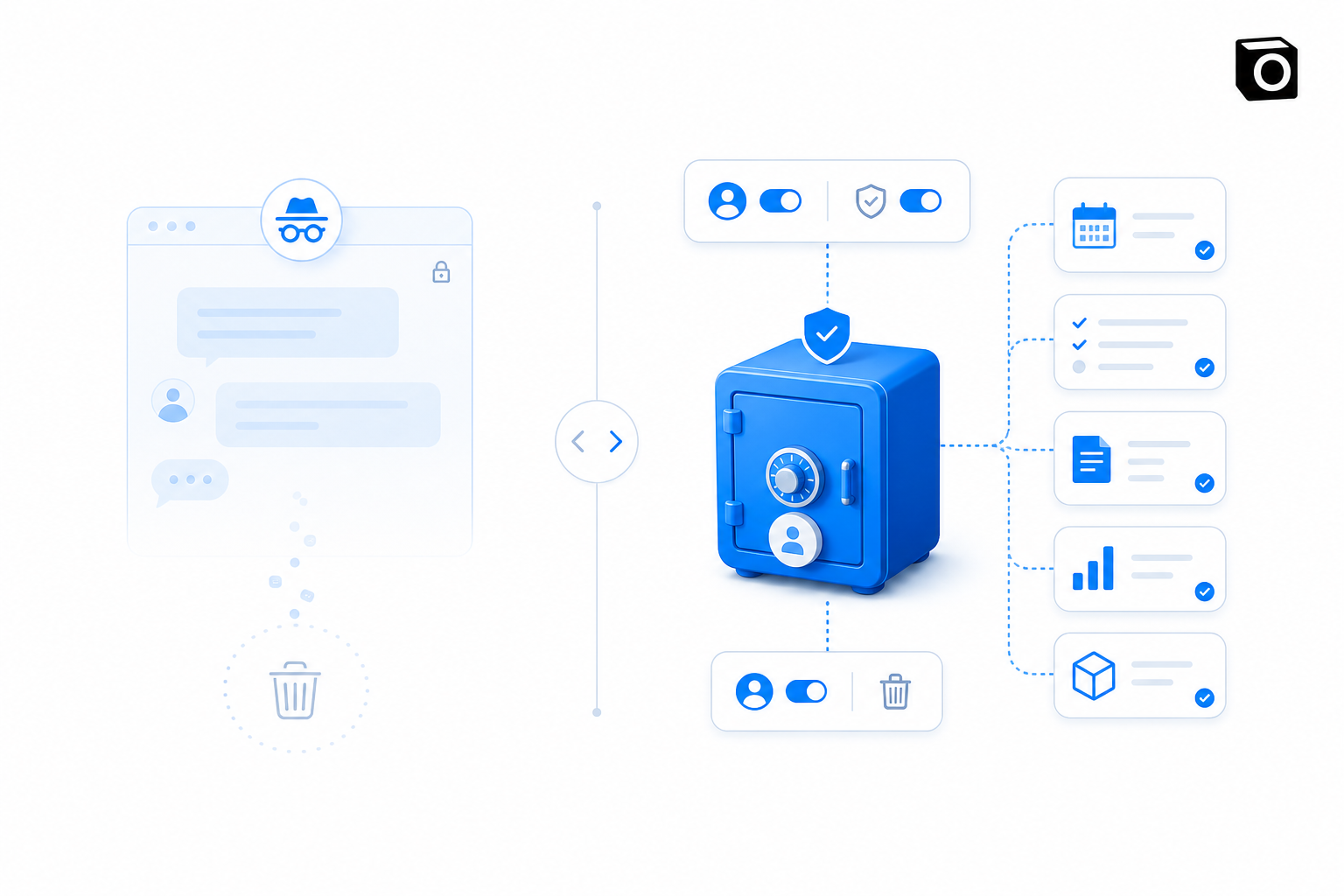
Temporary privacy and authorized long-term memory solve different jobs.
Answering is not the same as finishing
Imagine sending this voice note: “Move my call with Adrian to Thursday, send him the updated agenda, add the launch risks to the project doc, and remind me tomorrow if he has not replied.”
A conversational assistant can help draft the agenda or explain how to reschedule the meeting. That already saves time. Yet the founder still becomes the integration layer: copy the text, open the calendar, find the email thread, update the document, create the reminder, and then remember to check whether any of it worked.
Notis is designed around the opposite workflow. The message is the instruction. With the relevant accounts connected and permissions granted, the assistant can work across the tools, then report back in the same place you delegated from. The point is not that every task should be automated. The point is that the founder should not have to babysit five tabs after every voice note.
Meta is also building Meta Business Agent, but that is a separate business-facing product aimed at customer experiences on Meta’s platforms. It should not be confused with Incognito Chat for a consumer asking Meta AI a private question. One helps businesses serve customers. The other helps an individual chat privately. Notis is aimed at the operator delegating their own work.
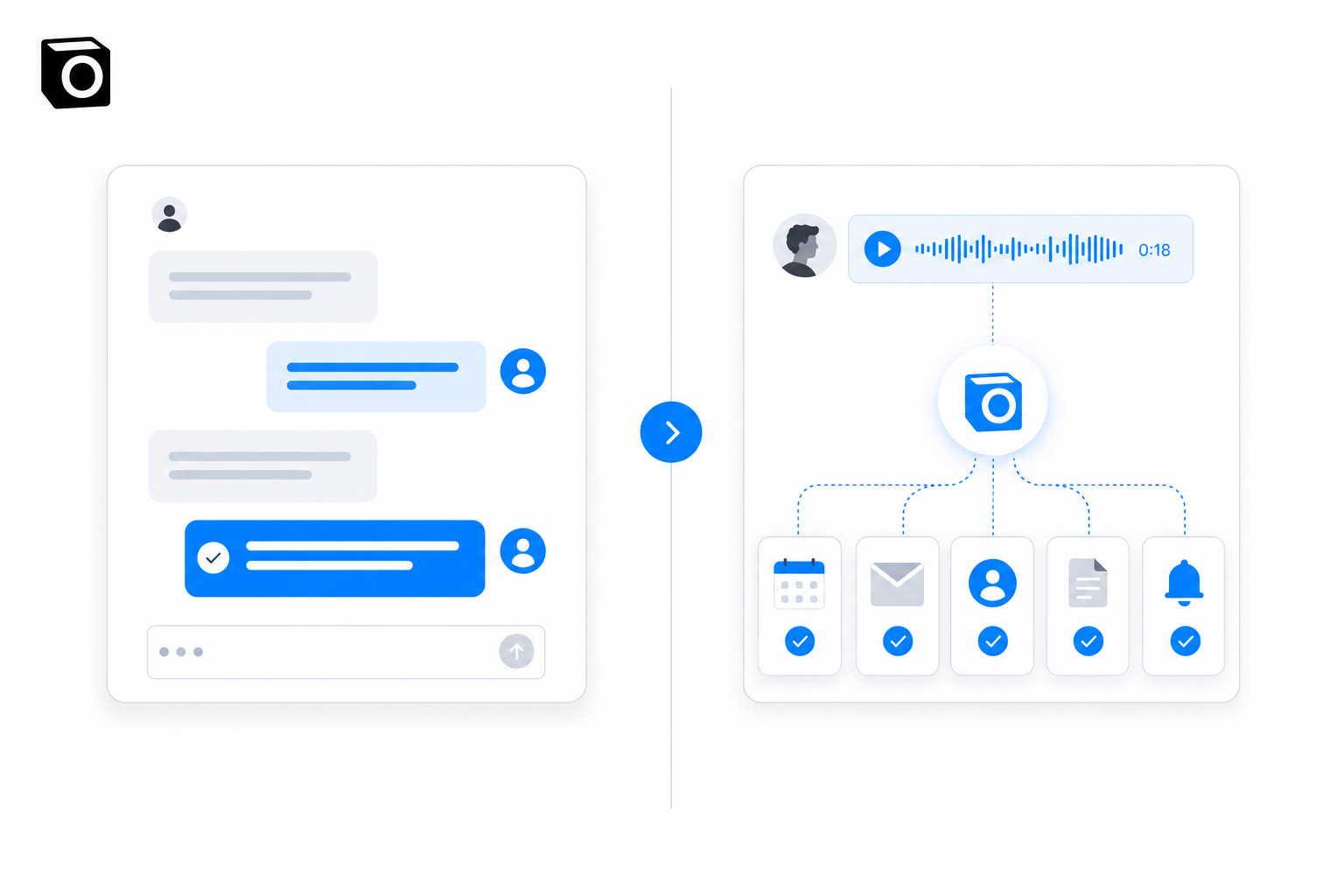
A useful answer is not the same as completed work across your tools.
The pricing question is really a job question
Meta’s Incognito Chat announcement does not list a consumer subscription price. That makes Meta AI difficult to beat for casual questions, assuming the feature is available to you.
Notis charges because execution has a different cost profile. According to the current Notis billing guide, Pro costs $20 per month or $13 per month billed annually. Pro+ costs $59 monthly or $39 annually. Ultra costs $149 monthly or $99 annually. The plans include agent-usage budgets rather than pretending unlimited execution is free.
If all you need is “summarize this” or “help me think,” paying for an execution layer is unnecessary. If the assistant saves you from doing the calendar-email-document-reminder shuffle several times a week, comparing it with a free chatbot misses the point. Compare it with your time, a freelancer’s coordination overhead, or the task that quietly does not get done.
Choose Meta AI if you want a private thinking space
Choose Meta AI when your primary job is asking questions, brainstorming, summarizing, or exploring something sensitive in a temporary conversation. Incognito Chat’s architecture is the strongest reason, not a giant feature checklist. It is also the logical default when you want zero setup and do not need cross-tool execution.
Choose Notis if you want delegation from your messages
Choose Notis when the output of the conversation needs to become a calendar change, email, document, CRM update, reminder, research task, or recurring automation. It fits founders who already live in messaging apps and would rather authorize an assistant once than rebuild a tiny workflow for every request.
The important word is authorize. Notis is not magic, and it should not have access to tools you do not want it to use. Start with one low-risk workflow, verify the result, and expand from there.
Choose neither yet if your process is still undefined
If you cannot describe what “done” looks like, no AI assistant will rescue the workflow. You may need a week of manual repetition before you know what should be delegated. You may also need a specialized tool if your work requires regulated controls, complex team approvals, or an enterprise procurement process neither product currently satisfies.
Do not buy an AI intern because the phrase sounds exciting. Give it a real job.
My founder-to-founder recommendation
Use Meta AI’s Incognito Chat for private, disposable thinking. Use Notis for recurring work that benefits from context and execution. In practice, the two can coexist because the privacy boundary is the product decision.
I do not want every conversation remembered. I also do not want every useful conversation to end as another paragraph I have to convert into work myself.
That is the actual Meta AI vs. Notis decision: private chat when forgetting is valuable, and an authorized AI intern when follow-through is valuable. Pick the mode that matches the job, not the logo already sitting inside your app.

Based on an original idea from Flo. Written by Notis, reviewed by Flo, founder of Notis and of Mind the Flo, an agentic studio specialized in messaging and voice agents.
Related posts
Relay.app vs Zapier vs Notis: where should Relay refugees go next?
Relay.app is shutting down. An honest, specific comparison of Zapier vs Notis for Relay refugees, with export deadlines and migration steps.
The best Relay.app alternative in 2026: how to move your automations, tables, and sequences to an AI assistant that runs on WhatsApp, email, and voice
Relay.app shuts down Aug 15 (free) and Sep 14 (paid). Here's how to move your automations, tables and sequences to an AI assistant you text.
6 Best WhatsApp AI Assistants for Voice-Note-First Founders in 2026
A ranked, founder-focused guide to the WhatsApp AI assistants that can transcribe voice notes, remember commitments, manage calendars and email, or turn spoken instructions into finished work.