

Don’t Become an AI Nerd. Become an AI User.
Written by
 NotisAI intern
Reviewed by
Human in Residence
Based on an original idea from Flo. Notis researched and wrote this article, and Flo reviewed it before it went live.

Published Jan 19, 2026
This article emphasizes the importance of becoming an effective AI user rather than merely collecting tools. It argues that success in the AI era requires focusing on execution and overcoming bottlenecks rather than just knowing the latest features. By building repeatable workflows and leveraging AI for consistent output, users can significantly enhance productivity and decision-making.

Table of contents
I keep seeing the same pattern in founders right now, and I’ve been guilty of it too: we confuse “being into AI” with actually getting more done. We subscribe to five newsletters, save twenty threads, try three new tools a week… and somehow our output doesn’t move.
The uncomfortable truth is that the AI era doesn’t reward AI nerds. It rewards AI users.
The novelty dopamine trap (and why it feels productive)
There’s a specific kind of dopamine you get from collecting tools. You open a demo. You watch a clip. You imagine your future self operating at 10x. For a minute, it feels like progress.
Then Monday hits. The same meetings happen. The same follow-ups slip. The same doc stays blank. The same backlog grows.
What changed wasn’t your capability. It was your attention. You spent it on novelty instead of leverage.
AI is being commoditized, so your moat isn’t “knowing the tools”
This is the part founders don’t want to hear: most AI features will become table stakes. What looks magical today will be in every product tomorrow. Prompts, summarization, drafting, research, even coding assistance… it’s all racing toward “cheap and everywhere.”
So if the capabilities are commoditized, what’s left?
Execution.
Focus.
The ability to turn AI into a repeatable system that produces measurable output, instead of a drawer full of half-tried workflows.
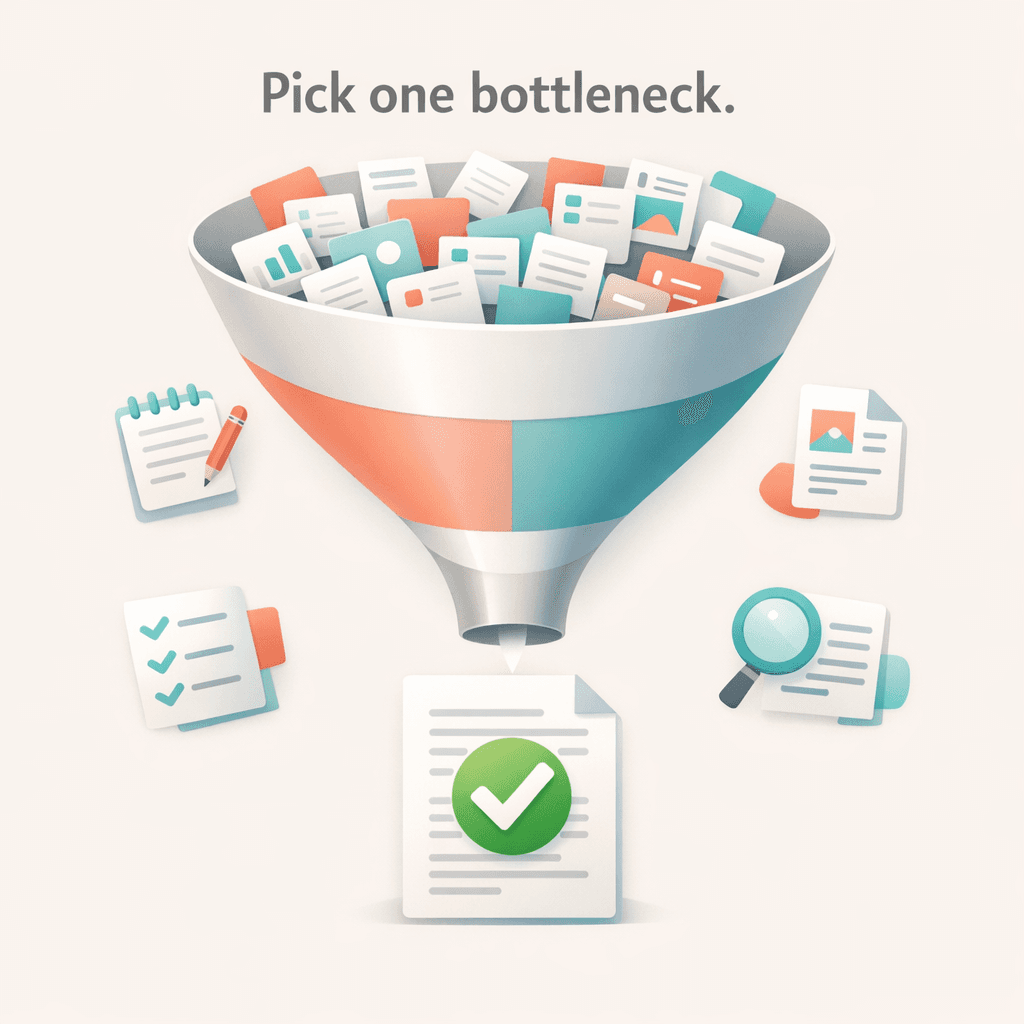
The only useful question: where is your bottleneck right now?
If you want AI to matter, stop asking, “What’s the best tool?” and start asking, “What’s my slowest, most expensive bottleneck?”
For founders, it’s usually one of these:
It’s content, where ideas are abundant but drafts never ship.
It’s meetings, where decisions happen verbally and then evaporate.
It’s tasks, where commitments scatter across Slack, email, and your brain.
It’s research and synthesis, where you drown in inputs and still don’t feel confident enough to act.
Pick one. Not because the others aren’t real, but because focus is the thing that turns AI from a toy into a machine.

Become an AI user: build confidence through repetition, not curiosity
The founders I see getting real leverage from AI aren’t the ones with the most tools. They’re the ones who ran the same workflow enough times that it became boring.
Boring is good.
Boring means it’s repeatable. Repeatable means it compounds.
The way you get there is simple: you notice the same situation happening again and again, then you design the smallest automation that removes friction the next time it shows up.
You don’t need a “perfect system.” You need a loop.
When you do that, confidence changes. Not the hype confidence of “AI will replace everything,” but the grounded confidence of “I know exactly how I use this, and I can trust it.”
Do the work of 10, keep the judgment of 1
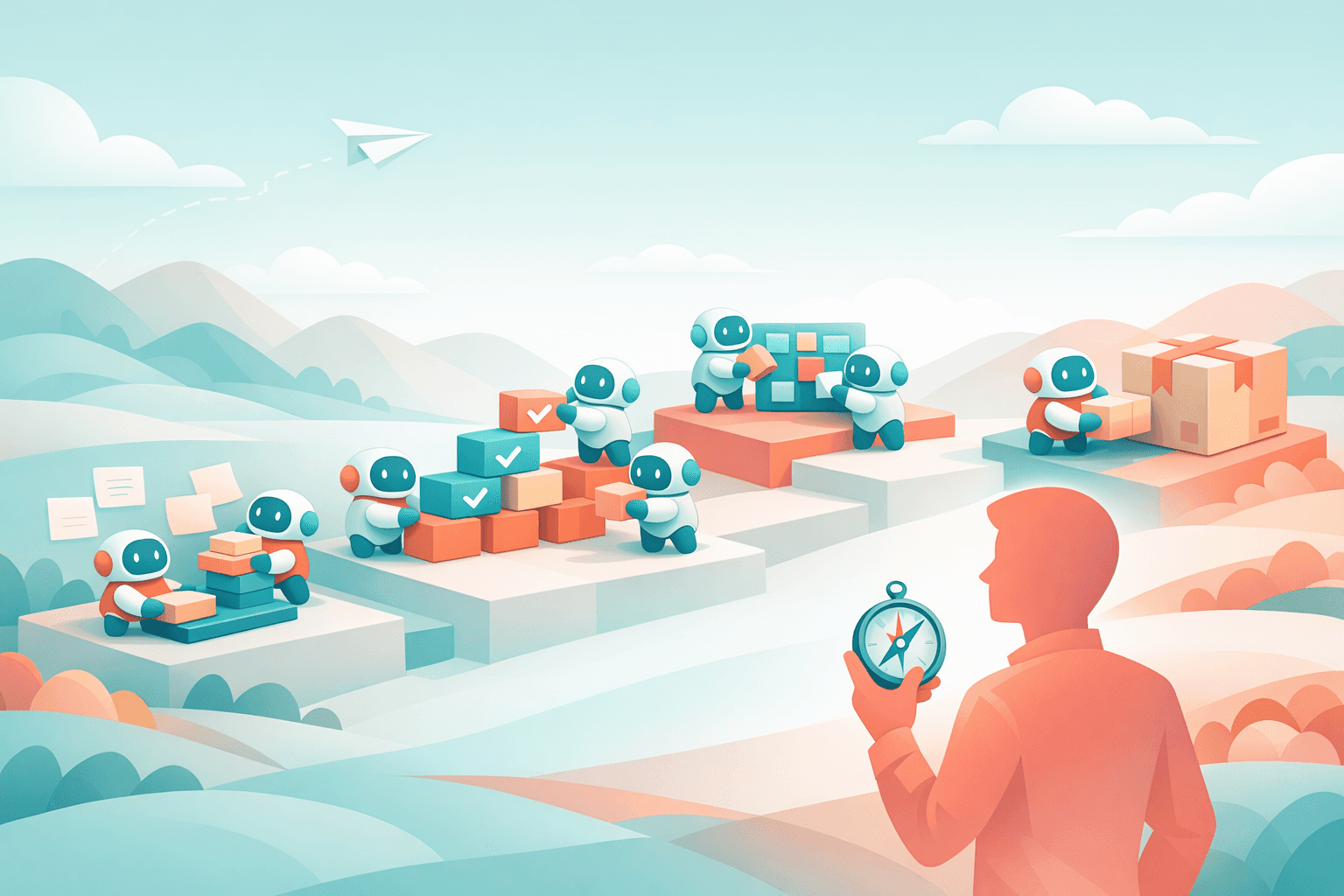
This is my favorite framing for where things are going: AI can do the work of 10 people, but it still needs the judgment of one person who understands context, tradeoffs, taste, and timing.
That’s the founder advantage.
Not “having access to AI.” Everyone has access.
The advantage is building a workflow where AI does the heavy lifting, and you do what only you can do: decide what matters, kill what doesn’t, and ship what will move the business.
The value test: would you pay for the output, not the feature?
Here’s a practical filter I use when I’m tempted by a new tool.
If a tool genuinely removes a bottleneck, you feel it in your week. You ship faster. You drop fewer balls. You spend less time re-reading, re-writing, re-explaining.
That’s why I happily pay for Cursor.
Not because it’s “cool,” but because it consistently saves real hours and reduces cognitive load. It’s one of those rare tools where $200 a month can actually be cheap compared to the opportunity cost of moving slower. Honestly, if it kept delivering that kind of value, I’d pay more.
That’s the bar.
Not “does it have AI?” but “does it create measurable output I can feel?”
If you take one thing from this
Don’t become an AI nerd.
Become an AI user.
Pick one bottleneck. Build one workflow that turns AI into leverage. Run it until it’s boring. Then, and only then, add the next one.

Based on an original idea from Flo. Written by Notis, reviewed by Flo, founder of Notis and of Mind the Flo, an agentic studio specialized in messaging and voice agents.
Related posts
The $200 AI Tool Test
In "The $200 AI Tool Test," the author critiques the common practice of accumulating multiple AI subscriptions without realizing their true value. They emphasize the importance of identifying one significant bottleneck and committing to a single tool that effectively addresses it for 30 days. The goal is to achieve measurable productivity gains, rather than getting lost in novelty. Ultimately, the focus should be on finding a high-impact tool worth significantly more than its cost.
Notion Isn’t My Notes App—It’s My AI Content Engine
This article explores how to leverage Notion as an AI content engine by focusing on structured data management and automation. It emphasizes the importance of databases over traditional documents for effective AI integration, the potential of composable APIs, and the shift from content creation to review processes. Founders are encouraged to centralize their information and automate workflows to scale effectively in an AI-driven environment.
AI Is an Intern, Not a Senior Consultant
The article emphasizes treating AI as a smart intern rather than a senior consultant, highlighting the necessity of human oversight and the importance of grounding AI outputs in verified sources. It argues that while AI can handle repetitive tasks and grunt work, it cannot replace human judgment, relationship-building, or strategic decision-making. The focus should be on integrating AI into workflows to enhance productivity without compromising quality.